Tag Archives: norfolk va

Ted Danson reschedules Norfolk appearance at Prince Books


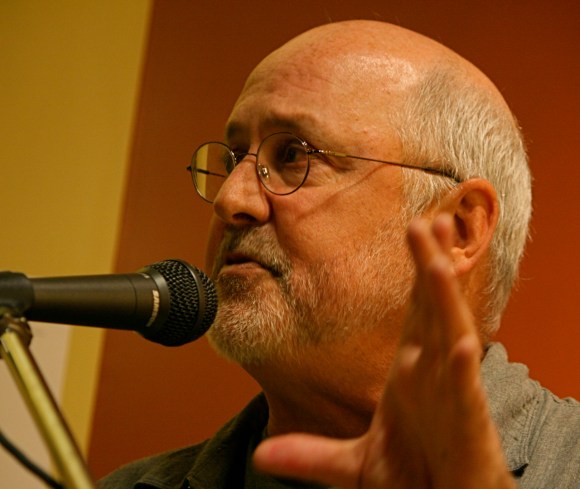
I never wanted to be a photo cutline. I just wanted to be close to Norfolk, Va., author Mike D'Orso. Photo by John Doucette.

It’s back on, baby.

Ran into Prince Books owner Sarah Pishko this evening in Norfolk, Va., where it is always sunny except when it is not, and she said Ted Danson is scheduled to come to Norfolk next month. And so it’s sunny again.

As you may recall, Danson had to cancel a planned visit in support of his recent writing project with local writer Mike D’Orso, Oceana: Our Endangered Oceans and What We Can Do to Save Them.

Danson was called away suddenly to battle the Yakuza, all of it at once, with his mighty anti-Yakuza Level 5 Power Handsome. Or he had to do some voice work for a cartoon. Okay, the latter is what discerning readers might call true.

Still, why do you hire the Danson and hide the handsome behind cartoon hijinks? Hollywood has been so confused ever since it went to the talkies.

D’Orso also sent out an email announcement this evening. And, so doing, he confirmed my crack reporting, which involved going to a store and running into somebody. Eat it up, Columbia J-School – two sources in a blog post! That’s like a hat trick, but with two things instead of three. Or a double threat. Because you can’t fight math.

D’Orso wrote:

We now have a new date and time set for Ted Danson to come and join me (and all of you – those can make it) in a discussion/signing of our book, Oceana: Our Endangered Oceans and What We Can Do to Save Them. The event will, as before, be held at Prince Books in downtown Norfolk, on Saturday, May 14, at 12 noon. As before, Ted will only be signing copies of the book (no other memorabilia).

Amusingly, D’Orso signed off in his email thusly:

Hope you can make it. It should be fun. – Mike D.

Amusing because Danson recently guested in the Beastie Boys video at this link, which is not safe for work unless your corporate pissing contests are a wee splash more than figurative. One of the Beastie Boys calls himself Mike D. Maybe that’s not really amusing, but it’s enough of a coincidence for me to get out of this post without bringing up the Yakuza again.

Anyway, the discussion and book signing starts at noon, Saturday, May 14, at Prince, 109 E. Main St., at the corner of E. Main Street and Martins Lane. If you head to Prince, there’s metered street parking and a couple city garages within easy walking distance. There’s also some free parking in the TowneBank lot behind the building on the Martins Lane side.

Previous posts with D’Orso can be found here. The book’s website is here. D’Orso’s website is here.

A glimpse of Danson in the Beastie video follows in this potty-mouth trailer:

Tagged , , , , , , , , , ,

Belligerent Q&A, Vol. IV: Jeff Maisey of Veer Magazine


Despite any impression given by this image's bright lighting, Veer publisher and editor Jeff Maisey is not a being comprised of pure energy and power. Yet. Photo by Kathy Keeney.

Norfolk, Va., publisher, editor and writer Jeff Maisey started Veer Magazine, a monthly alternative publication and website serving the Hampton Roads region, two years ago following the death of PortFolio Weekly.

Veer, while carrying the name of another former local music zine, also carries a bit of the feel of the defunct PortFolio – not to mention some of the pub’s strongest contributors.

An online shell of PortFolio lurched along until December, when a note was posted about what its author insists on calling a “digital double” of the print edition. Saying it don’t make it so. Because nothing says so long alt weekly like a note from a “staff” gutted years earlier, and what appears to be stock art.

At least we’ve got Veer and AltDaily, two alternative outlets with their own voices, rather than an “alternative” published by the dominant media source.

Maisey had edited PortFolio until its demise as a free weekly in early 2009, and quickly put the nuts and bolts in place to launch Veer. Among the Veer contributors who should be familiar to folks around here are Jim Newsom, Leona Baker, Larry Bonko, Kristen de Deyn Kirk, Montague Gammon III, and Patrick Evans-Hylton – not to mention longtime PortFolio editor Tom Robotham, Maisey’s predecessor in that gig.

About a year ago, Maisey told me his research with advertisers showed they would back a version of PortFolio without the political tone for which it was known under Robotham. That said, Veer for some time now has had Robotham batting lead-off with an essay that can be reflective or give the pub a little bite. This month he addresses the tension between those that filled the PortFolio void and the company that created the void in the first place.

This past week, Maisey said he has ideas in the works for more publications. He recently launched Afr-Am, aimed at the local African American community, and more may be on the way – including ideas that sound like they will directly challenge a few pubs produced by Maisey’s old employer. We recently traded emails on Veer, light rail, and the quantification of TV news personality hotness.

Q: Just who do you think you are? Please use three examples in your response.

Today I’m a romantic, smart-ass travel addict in need of a fix. That’s three, right?

Q: Veer is celebrating its second birthday. Given the past struggles of other alternative publications in Hampton Roads, including PortFolio, is wishing you another two years in the print business a blessing or a curse in the internet age?

I hope you wish us more than two additional years. Independently published magazines – and I’m talkin’ PRINT –  in this region are actually flourishing. We are seeing growth and additional opportunities. I launched a new monthly magazine in February geared to the African American community. What’ll we launch next? A weekly business journal, parenting pub or catalog of apartments? Hmmm … stay tuned.

Q: As a musician and longtime music writer, what is it about the local music scene that keeps you from giving up the legwork and just holing up in your abode and letting iTunes do the heavy lifting for you?

A thriving local music scene is essential to the quality of life in any city/region. The more that can be done to bring attention to it…the better. Plus, who doesn’t like reading about themselves?

Q: The Virginian-Pilot’s Deirdre Fernandes recently reported that extending light rail from the Norfolk border to the Oceanfront could run about $807 million. Virginia Beach Mayor Will Sessoms told The Pilot that “sounds like a lot of money” and also “my gut would question whether the ridership would be there to justify the cost.” Set aside troubling implication that the mayor seems to quantify sums with his ear and gives serious consideration to the skepticism of his gastrointestinal tract. Why so much hesitant language at this point? Should we continue to invest in rail given the road and tunnel situation, economic development potential, etc? Or do we need the time out to consider stuff like “rapid transit” buses?

I penned a commentary on this topic in the April 15 issue of Veer and could talk additional hours over a beer on any given afternoon. For any mass transit system to work it needs to be practical and run efficiently, on-time and frequently. Anything less will result in low ridership. Over 50 years ago Norfolk had an electric trolly (light rail) that extended from downtown, down Granby Street and to Ocean View. Many businesses and residential areas were within a few blocks of the rail line.

Given the updated estimate – which will likely go up to $1 billion – for extending light rail from Newtown Road to the Oceanfront, I’d say the numbers aren’t favorable for a city – Virginia Beach – whose residents have been less than enthusiastic overall on the notion. So if Norfolk’s light rail goes no greater distance than it’ll serve this year, I’m less than optimistic about its long term health. Both end-of-the-lines are pedestrian dead zones. Any real ridership will be confined to downtown and maybe as far as the baseball stadium.

But, again, if the train isn’t convenient to my schedule, it might be quicker to just walk to my destination and save the dollar. And I’m an advocate for rail. As for ‘rapid transit buses,’ on a region-wide scale, it’s just not gonna work for the reasons I previously stated. I’d be happy if the NET bus route was extended to 21st Street and Colley Avenue. BUT it needs to operate more frequently and from 8 a.m. to 2:30 a.m. Needs to serve the 9-to-5 workforce as well as diners, bar hoppers, concertgoers and get Ghent dwellers home safely when the Tides go extra innings.

Q: Veer recently named Laila Muhammad the sexiest television newsperson in Hampton Roads. Did you ask Larry Bonko to watch evening TV until he became suitable aroused, or was there some other methodology?

Nearly 10,000 votes were cast online. That’s enough to get someone elected mayor in this town! Some people thought the subject matter was beneath Veer, but the pickup rate was great and we attracted some new readers, who, admittedly, probably watch an unappetizing array of American Idol and Dancing with the Stars. Hopefully, they scanned the other pages within Veer as well.

Q. We’ve covered so much ground here. What else would you like to say?

Good night and good luck!

The new edition hit the stands on Friday. Here’s a link to the places you can pick it up.

By way of belated full disclosure, I used to string for PortFolio and have contributed occasionally to Robotham’s TReehouse Magazine website, including some writing about Veer and AltDaily.

And Maisey and I are both “Survivors of Landmark,” so there’s that. Remember, “SOL” tees are available at this blog’s Merch store.

Tagged , , , , , , , , , ,

Earl Swift shall rock you Thursday at the TCC lit fest in Norfolk, though in this headline ‘rock’ = ‘read to’


Norfolk, Va., author and journalist Earl Swift now has a more active name. His old-country handle? Earl Lentissimo. Photo by Saylor Denney.

Norfolk, Va., author and journalist Earl Swift, formerly of The Virginian-Pilot, will read on Thursday as part of Tidewater Community College’s 10th Annual Literary Festival.

The festival’s theme is “How words can help consume delicious natural resources.”

Wait, I have that all wrong. TCC’s lit fest theme is really “Words of hope for our fragile planet.” Maybe next year.

But back to Swift.

He’s an award-winning journalist. His work has appeared in Parade and Best Newspaper Writing. In 2007, some of his best stories were collected in The Tangierman’s Lament. He’s also the author of the riveting Where they Lay: Searching for America’s Lost Soldiers, and Journey on the James: Three Weeks Through the Heart of Virginia, which began as a newspaper collaboration with photographer Ian Martin.

Swift’s latest book is due to be published in June. It’s called The Big Roads: The Untold Story of the Engineers, Visionaries, and Trailblazers Who Created the American Superhighways. If I’d had a subtitle that long back in high school, I would have been more popular.

This past weekend, Swift said he was still choosing the selections he will read Thursday, but was leaning toward something from The Tangierman’s Lament, something from The Big Roads, and a project that is in the works. The latter piece is one he hasn’t read in public before. He hasn’t read anything from The Big Roads, either.

He’s looking forward to Thursday:

The festival has a theme: ‘Words of hope for our fragile planet.’ I’m kind of bound to make selections that are connected to the theme. That’s something that has made me come up with stuff that I normally wouldn’t do.

You can read more about Swift at this link to his website.

The Big Roads is a history of how the U.S. interstate highway system came to be, and how it “changed the face of a continent.” To me, that fits in well with TCC’s theme. Nothing bucks up a wimpy planet like a thorough paving.

Should be a great lit fest. By the end of the week, pretend experts say, the Earth will be 5 percent sturdier. And, forever more, space children will taunt Earthlings thusly:

Your planet’s so fragile TCC called it out in a literary festival theme.

The reading is at 12:30 p.m., Thursday, April 14, at the TCC Roper Performing Arts Center, 340 Granby St., Norfolk. Free admission. Info at (757) 822-1450. There is some metered street parking but the best bet at lunchtime downtown is one of the garages, either at Freemason and Boush streets, or at MacArthur Center.

Some of Swift’s books will be available for sale, too.

Tagged , , , , , , , , , , , , , , , , ,

UPDATED: Ted Danson coming to Norfolk for talk with Mike D’Orso


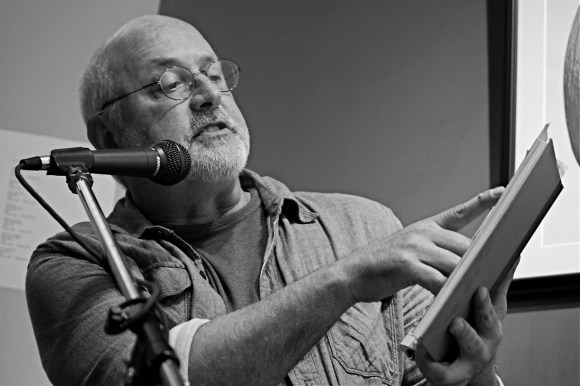
During a recent reading at Borjo Coffeehouse in Norfolk, Va., author Mike D'Orso points out something in a book he is holding. The microphone pretends to understand, but the microphone has a painful secret — illiteracy. Photo by John-Henry Doucette.

• • • • • • • • • • •

April 27

It’s back on, baby. Ran into Prince Books owner Sarah Pishko this evening in Norfolk, Va., where it is always sunny except when it is not, and she said Ted Danson is scheduled to come to Norfolk next month. And so it’s sunny again.

And you may recall, Danson had to cancel a planned visit this month to promote his writing project with local writer Mike D’Orso.

Danson was called away suddenly to battle the Yakuza, all of it at once, with his mighty anti-Yakuza Level 5 Power Handsome. Or do some voice work for a cartoon. Okay, the latter is what you might call true.

Mike D’Orso also sent out an email announcement this evening. D’Orso wrote:

We now have a new date and time set for Ted Danson to come and join me (and all of you – those can make it) in a discussion/signing of our book, Oceana: Our Endangered Oceans and What We Can Do to Save Them. The event will, as before, be held at Prince Books in downtown Norfolk, on Saturday, May 14, at 12 noon. As before, Ted will only be signing copies of the book (no other memorabilia).

• • • • • • • • • • •

April 19

Ted Danson has postponed his visit, according to Prince Books.

Prince hopes to have a new date to announce in the next week.

Mike D’Orso, in an email announcement, said Danson had to do a movie shoot:

Ted was extremely apologetic and we will set a new date soon. Sorry to all for the inconvenience. But rest assured he is still coming.

• • • • • • • • • • •

April 9

Welcome back to the blog that does little more than tell lame jokes about blood-spitting rock’n’roll bass players repping high-end insurance products and walk-up whatever Norfolk, Va., author Mike D’Orso is doing. Look, it’s a niche. When you see one, you gotta carve it out before James Franco does.

A while back, I wrote about D’Orso’s collaboration with Ted Danson, Oceana: Our Planet’s Endangered Oceans and What We Can Do to Save Them, published this past month by Rodale Books. D’Orso — he’s a friend, full disclosure — recently did a reading and Q&A at Borjo. It was great stuff, but it was light on Danson.

Now D’Orso says Danson is headed to Hampton Roads for an appearance at Prince Books, one of the last independent bookstores in these parts. A discussion and book signing starts at 1 p.m., Saturday, April 23, at Prince, 109 E. Main St., at the corner of E. Main Street and Martins Lane.

D’Orso, via email, said:

We’re going to have a nice casual sit-down conversation for the first half, then open the floor to any and all questions not pertaining to ‘Cheers,’ ‘Damages’ or ‘Bored to Death.’

So fire up those Becker, Body Heat and Three Men and a Little Lady questions.

Just kidding. Maybe just stick to ocean acidification, commercial fishing and so forth. Though if you want to ask something cheap — say along the lines of Apparently our planet’s oceans are endangered; what can we do to save them? — it’s been done. Got there first, didn’t I, Franco?

Regarding Danson, D’Orso added:

He – and I, if people want it – will then sign books before I toss him back in my Camry and drive him back to the airport.

And while you’re at Prince, maybe you could buy some books. It’s National Poetry Month. Twenty percent off poetry. Not bad, if you’re into that sort of thing.

If you head to Prince, there’s metered street parking and a couple city garages within easy walking distance. There’s also some free parking in the TowneBank lot behind the building on the Martins Lane side.

Please don’t park in Pete Decker’s space. It simply is not done.

Nothing left to say, so it’s boilerplate time:

Here’s a link to info on the Danson-D’Orso book.

Here’s a link to a recent video interview with and story on D’Orso by The Daily Press.

Here’s a link to D’Orso’s site.

Here’s a link to a James Franco fansite run by a lady named Vanessa, who will pay or already has paid good money to see Your Highness.

Finally, here’s an absolutely pointless link to the very post you are reading right now.

Tagged , , , , , , , , , , , , ,

Belligerent Q&A, Vol. III: Travis A. Everett of Tunnel Traffic


Travis A. Everett, who is from Texas, wears a hat with not one but two Ts on it in this photo. He is the founder of Tunnel Traffic, an occasional reading series. Texans seem to like a certain kind of alliteration. Photo by John-Henry Doucette.

Tunnel Traffic is an open-mike reading series that generally is held at Borjo Coffeehouse near Old Dominion University in Norfolk, Va.

The series was developed by Travis A. Everett in coordination with the MFA Creative Writing Program at Old Dominion University. One of its sponsors is Barely South Review, the program’s online literary magazine. By way of full disclosure, I’m a student in the MFA program and was one of the fiction readers for the review this past year.

I recently traded emails with Everett, since the next reading is coming up on Wednesday, April 13. The topical reading series is meant inspire new work and provide reading experience for students, according to the webpage. Writers write to prompts announced before each reading. The vibe is meant to be low-pressure and casual.

In addition to his studies at ODU, Everett is a poet and the founding editor of escarp, a text message-based review of “super brief literature.”

This Belligerent Q&A is about Tunnel Traffic. In case you missed the photo cutline above, let me mention that Everett is from Texas. I wonder if that will come up.

Q: Just who do you think you are? Please use three examples in your response.

  1. An accident waiting to happen
  2. A typography/design geek
  3. A weekend programmer

Q: It seems to be an interesting choice to name something Tunnel Traffic and expect people from Hampton Roads to want to experience it. Please describe your marketing plan in a limerick, haiku, or rhyming couplets.

I come from West Texas
where sky is the coolest thing
you can drive under

Q: The bling, the flashy cars, the reality shows – hasn’t the public had enough of the ostentatious lifestyles of the creative writing community and its twisted, insatiable passion for the subversive forms of fiction, poetry and narrative nonfiction?

Well, I think that’s actually one of the problems contemporary literature faces. So the equivalent of a Benz and a bottle of Cristal is a stuffy reading voice or a highly referential style that both resist non-writers — and the reality-show analog is writing about a writerly life like it’ll matter to anyone who isn’t a writer. There’s room for that, of course, but I also think it’s a really self-fulfilling prophecy to bemoan the lack of readership for very writerly books of poetry and prose. So in that sense, yeah — I think the public has had its fill of a specific kind of writerly lifestyle.

Q: Your readings are “topical” – please explain. Does that mean topical like a Jay Leno monologue, or topical in a way that prolongs one’s will to live?

Or topical like anti-itch cream? So you can listen to one late night monologue and hear a joke about, let’s say, a runaway Toyota, and you might laugh. But a single joke doesn’t show how far the content can stretch. Let’s say it’s topical like a roast, or a slam-dunk contest: shedding the usual rules of the dance give it a relaxed, fun, informal atmosphere with an undercurrent of both inter- and intra-personal competition.

In some sense it doesn’t matter, on The Tonight Show, if Jay has the best Toyota joke or not (as long as his joke is at least funny) because he’s not in a topical context. But if you take a number of late-night hosts and other comedians and let them know you’re having a runaway-Toyota-joke-night, they’re each going to be looking for an angle no one else will take and as a result they’ll cover a lot more territory, territory they probably wouldn’t have opened up as individuals outside of that context.

Q. We’ve covered so much ground here. What else would you like to say?

If you commit to coming, a topical prompt will help you write something you probably wouldn’t have written otherwise. Seeing how other writers approach the same task can help expand your sense of what words can do. It’s a low-pressure way to get reading experience.

The next Tunnel Traffic reading is scheduled from 8 to 9:30 p.m., Wednesday, April 13, at Borjo at W. 45th St. and Monarch Way. The topics are Easter eggs and/or gunpowder. Members of the public are welcome to come out either to listen or to read.

Tagged , , , , , , , , , , , , , , , , ,

Poetry that recognizes the struggle against sexual assault


Breaking the Silence, Speaking for Peace, a poetry reading to raise awareness of the struggle against sexual assault, will be held Monday, April 11, at Old Dominion University in Norfolk, Va.

The reading features several ODU poets, including Luisa Igloria and Tim Seibles. They will read poems that speak to survivorship, peacemaking, healing from trauma, or the struggle against sexual assault.

The event is sponsored by the MFA Creative Writing Program at ODU and the ODU Women’s Center. The reading is from noon-1:30 p.m, Monday, April 11, in the James Lynnhaven Room, Webb Center, Norfolk. Admission is free.

By way of full disclosure, I’m an MFA student at ODU.

Igloria, director of the MFA program, said via email that she had been looking for an event to commemorate National Poetry Month. Wendi White, graduate assistant with the Women’s Center, approached Igloria about holding a joint project.

White works with the center’s Sexual Assault Free Environment, or SAFE, an educational program on sexual violence and relationship issues. She’s in her first year with the MFA poetry program.

White, via email, said the poetry event will help raise awareness about sexual violence and help people prevent it – with attention, of course, also paid to the issue of sexual assault on college campuses. Regarding the connection between poet and audience, White added:

This is a very powerful transaction that can transform how the reader sees the world, and therefore, the world itself. … (P)oetry can create empathy for survivors and lift up the possibility of peace in a way that moves people to action.

Serving the Old Dominion University community since 1976, the Women’s Center is the oldest center of its kind on a Virginia college campus. Our programs and services address the special challenges and opportunities women students encounter as they pursue their academic goals. Also, recognizing the critical role that both women and men play in creating a world that is free of gender bias, our goals include promoting healthy relationships and a safe and equitable environment that is free of barriers to all persons.

Said Igloria:

When folks hear of either one – poetry, or women’s/gender issues – I think that it may still very well be the general perception that these are ‘fringe’ types of topics but that couldn’t be farther from the truth. …

This reading event is open to the university, as well as to the general public. Folks can participate by being part of the audience and coming to hear great poetry read, or by reading one or two short poems. It can be either their own original works or by another poet, as long as the poems selected address the general topics of violence against women or our struggles in general to create peace in our world.

It may seem like this is a broad umbrella, but I think this makes it possible for different voices to participate in the activity.

Featured readers include Til Cox, Tyrice Dean, Travis Everett, Jennifer Graham, Igloria, Renee Olander, Noah Renn, Seibles, Marion Charlene Thomas, Cesca Janece Waterfield, and White.

For more information or to participate, reach White via wewhite@odu.edu or (757) 683-4160. Members of the public who want to read must contact White before Wednesday, April 6, to sign up.

Igloria wrote that she’s still determining what she’ll read.

Thinking about and preparing for it makes me think of how very central and very important language is in shaping the realities of our lives, globally as well as where we are; and I think poetry has this capacity for making us aware of the effects of language, and for speaking very intimately to us as well as addressing concerns that are universal.

When I listen to (or read) a poem, I feel very much in the presence of a very human experience; poetry makes me feel like a witness to human events that are important and real, no matter how ‘small’ they may be. Perhaps that’s why I recently ranted (a bit) about the way National Poetry Month is being ‘celebrated’ in some popular venues.

A link to that post at Igloria’s blog can be found here.

Tagged , , , , , , , , , , , , , , , , ,

Mike D’Orso book signing Wednesday in Norfolk


Norfolk, Va., writer Mike D’Orso will discuss and sign copies of his new book this week at Borjo Coffeehouse near Old Dominion University.

D’Orso, an award-winning author and formerly a journalist with The Virginian-Pilot, collaborated with the actor and environmental activist Ted Danson to pen Oceana: Our Planet’s Endangered Oceans and What We Can Do to Save Them. It was published by Rodale Books earlier this month.

The event is being held by Prince Books, a terrific bookstore in downtown Norfolk that for years has supported local writers – even when we haven’t had anything to sell.

Prince Books is one of the best things about downtown Norfolk. I’ll fight anyone who says otherwise.

The discussion and signing is at 7 p.m., Wednesday, March 30, at Borjo, 4416 Monarch Way, Norfolk. That’s at the corner of W. 45th Street and Monarch Way. Pretty much all of the parking around there is metered before 8 p.m., so bring a couple of quarters.

As regular readers of this blog may recall – love you, Mom – Mike spoke with me for a couple of posts earlier this month, including guest starring in the inaugural edition of the inexplicably and, let’s face it, only relatively popular Belligerent Q&A feature.

Also a more serious discussion on one of his great journalism stories can be found here.

Hope to see you Wednesday at Borjo.

They have coffee and grownup bevs for sale. Just throwing that in there.

Tagged , , , , , , , , , ,

Writing Craft, Vol. II: Kristin Naca (Part 1)


The following discussion with Kristin Naca, the Spring 2011 Visiting Poet in Residence for Old Dominion University’s MFA Creative Writing Program, took place this past June. It was for a class, and she graciously has agreed to let me publish sections of it. As I posted recently, there are two upcoming events featuring Naca that are open to the public. Admission is free. You should check them out:

  • From noon to 1 p.m., Wednesday, March 16, there is a craft talk called “The Secret Tradition: How Translation Revolutionized 20th Century Poetry.” The talk will be held in the Burgess Room, 9024, in the Batten Arts and Letter Building, at the corner of West 45th St. and Hampton Boulevard, Norfolk, or across Hampton Boulevard from the Ted Constant Convocation Center.
  • And at 5:30 p.m., Thursday, March 17, Naca will hold a poetry reading at the University Village Bookstore. Copies of her book will be available for purchase and signing, and refreshments will be provided. The bookstore is located at 4417 Monarch Way, at the corner of Monarch Way and West 45th St.

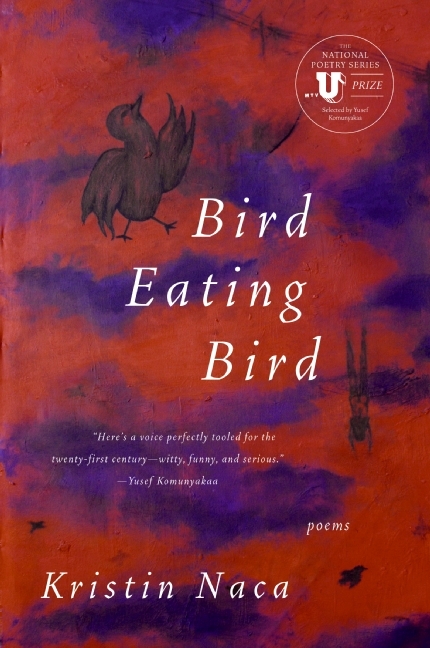
Naca is the author of Bird Eating Bird. The poems include three languages, Spanish, English and Tagalog. I started out our talk asking about some poems that appear in Spanish and then in English, though the translations are not mirror images. I have edited the following for clarity and length.

Q: When did you start writing in Spanish? Was it for the MFA project, your first book?

I think I was revisiting the interest I had even as an undergraduate. My Spanish … really wasn’t in my bones in any way at that age. I’d been in Spanish class a lot but hadn’t really explored whether I had any personal connection to it. At that time I did, but I feel like I didn’t have the resources at that young age to align my memory and to get a thoroughly immersed in Spanish like I did in my MFA project. It shouldn’t have the same relevance to me when I was that young. Once I was out on my own longer … As an artist, you’re really crafting yourself and your personality. My personality and who I was is really interlinked in what I was studying.

Q: (One poem in Spanish is called “Seguir”; the English version is “Seguir: To Follow, Keep On, Continue.”) The title of the translation, it’s almost like there aren’t the words in English to explain this one Spanish word.

I think the title is very much like it’s own dictionary entry, you know? I’d been working on a few different words with that approach, in particular words where the concept was complex, and the construction of what they mean. I wasn’t sure I understood the translation. … The word is like a concept of time and how we experience time. … Imagine like how the word works in time, that’s what I think I was trying to find a metaphor for. It’s like a really weird word. Sometimes you can use it to cast out into the future and sometimes it talks about what has happened in the past and sometimes it’s related to the future. … It’s a verb that has a past and a future to it. I was trying to work with these phrases that were like reflections, and I think even “Todavia No” is even like one of those choices. … The concepts of something not quite being there or something still being there.

Q: I wondered how you are assembling the images and the words that get you where you want to go. Does it start with just one idea?

I don’t know if this unusual. I ended up just observing what was in my immediate environment, and tried to write down anything I could observe in detail and also in another language, when I was in Nebraska. Interestingly enough, this is in the details of nouns, but it’s what I can see around me.

Q: Did you write it first in Spanish?

First in Spanish. I was trying to demonstrate where the fragments of my Spanish were. Like, where the ragged ends of my lexicon were. If I didn’t know a word … Sometimes the word isn’t at my finger tips. And then there’s alliteration. I’m definitely someone who will alliterate until I hear the word I’m looking for. I’ll do that in Spanish and I’ll do it in English, too. …

Q: “Todivia No” was one of the poems where I read it and I wished that I had written it. One of the things I struggle with is structure and it just seems, it’s so hard to explain. I just can’t picture it being written another way.

I have a friend who writes fiction and she’s kind of a young literary fiction writer, and she says don’t you feel like you can just futz around with in for ever, when I was in the last two months of editing it, and I was just like no, poems are … at a certain point you cannot rearrange it. That’s when you know. If the poem has a life of its own then someone else can read it see the intangible elements. I think maybe because I’m a relatively young writer too, when you’re compositing a certain way. I guess the best way to describe it is reaching negative capability. You really do empty yourself out and try to comply to the will of the poem. If you hear that there is a poem in there or if you hear that there is a poetic dimension that are just like around the corner, the you let go of what you want the poem to be, what you were trying to force the poem to do, and eventually you let the poem come tell you how it’s supposed to go. It’s not the easiest process. It’s just like, strip down your ego, you know? And say my original intention is not what’s important. What’s important is the intention of the poem that’s there. Or at least the poem that’s better. (Laughs.) I don’t know if you feel that way writing stories.

Q: I do. Actually, I had a workshop last year where I kind of got out of my own way.

That’s exciting. It’s exciting and it’s hard to do. And once you do it once it’s like now I have to do that 100 more times or as many times as I need to. That can be a scary process.

Q: You had very little Spanish when you were a kid?

Yeah. Practically none. It was only like when certain relatives would come in from New York City. When my grandmother would come in from, I think she was living in Maryland. My father would speak Spanish only to them, and not to us.

Q: I just want to tell you, in “Uses for Spanish in Pittsburgh,” a line I love: “Still I remember he spoke a hushed Spanish to customers who struggled in English, the ones he pitied for having no language to live on.” One of my favorite lines.

Thanks. I really appreciate that. … I think my parents were very much like the economics of learning certain languages just don’t make sense. And Spanish doesn’t make economic sense. Though my father said that he heard a quarter of the globe would speak Spanish by 2000. But he wanted us to learn Chinese. He was much more in favor of us learning Chinese than Spanish. He thought that was more economically viable.

Q: Similar to my mother’s experience with Italian. The kids didn’t speak Italian. The words my mother and uncles carried forward are the words I heard when I got in trouble.

(Laughs.) The cursing and sometimes swearing, right? That’s gotten me in trouble once or twice with Tagalog.

Q: Did you have the same experience with Tagalog?

It’s exactly the same kind of thing as you said. We learned like body parts. My mother’s family is like I guess third-world poverty working class, and whatever I learned in terms of body parts were much more crude than I think people in the city were learning and, while I was aware that the Catholic Church is a power in the Philippines and there are elements of shame, like shame for the culture or social rules, I didn’t really understand how that shaped the language I learned. So I met a another Filipino writer and she was a year behind me and we talked about the shame involved in openly talking about sexuality. At the time any Filipino I knew was just saying the body parts and such. When I repeated it back (to the other student) when she heard me say – and apparently it wasn’t just like the names of body parts but I was also saying phrasing I didn’t know, and it had been vulgar. When the whole things went down, she blushed. I didn’t know Filipino people could blush. She just turned beet red. She was like afraid of me for the things I had learned to say. It was like in a really crude form. It was a little bit of class difference in what my family was teaching me, and her background. … I think the story of my life is I’ll come into contact with a language other than English and I may not know the dynamics of the way I’m learning it or a full sense of what I’ve learned or what I’ve actually heard. And then I have an opportunity to learn. … Luckily I realized I enjoyed learning about language. I had no idea I would enjoy learning about languages until I got further along in my studies.

Q: Did you feel personally that language was missing, that you wished you had more of it?

I really wanted to learn it. I was really good at languages until I was 13. When I started studying Spanish in high school …  generally, I was a really bad student, but that didn’t relax my curiosity about it. And when someone tells you not to it’s just burned into your memory in a way that it’s an indelible thing that you must have. That couldn’t have been more clear to me in that it developed into a profound interest in studying Mexican American writers. And then having them become my circle of thought and colleagues, and then I could not not pursue it. Everything is pointing in the direction  of this is what I should do. It was the first time I had a scholarly pursuit and my scholarly pursuit was hand in hand with like a natural curiosity.

Q: The poems are so personal and powerful, does it come just a core part of your personality at that point? Was it just real effort or was it both?

I think you’re asking the age old questions. I think what I learned in my MFA, though I couldn’t really express it, was I had more intellectual faculty than I thought I did. … I think when you’re an MFA student your main goal is to become a better writer, not to write a book. You’re going to write an entire manuscript, for instance, but it’s sort of like you don’t have to worry about it. You have to do it in order to graduate. The real opportunity should be to learn as much as you can, change and grow as much as you can. I learned that you just have to really study you craft and that so much of the world will sort of unlock for you if you work on it. It was sort of my passport into a community.

I’ll post more of this discussion shortly. For more information on Naca, visit her site here.

Tagged , , , , , , , , , , , , , ,

Belligerent Q&A, Vol. II: Kristin Naca


Kristin Naca is the Spring 2011 Visiting Poet in Residence for Old Dominion University’s MFA Creative Writing Program in Norfolk, Va. In addition to working with some really lucky MFA students – including me – there are two events that are open to the public (and free). She’s amazing, so I hope you can make one or both:

  • From noon to 1 p.m., Wednesday, March 16, there is a craft talk called “The Secret Tradition: How Translation Revolutionized 20th Century Poetry.” The talk will be held in the Burgess Room, 9024, in the Batten Arts and Letter Building, at the corner of West 45th St. and Hampton Boulevard, Norfolk, or across Hampton Boulevard from the Ted Constant Convocation Center.
  • And at 5:30 p.m., Thursday, March 17, Naca will hold a poetry reading at the University Village Bookstore. Copies of her book will be available for purchase and signing, and refreshments will be provided. The bookstore is located at 4417 Monarch Way, at the corner of Monarch Way and West 45th St.

Naca is the author of Bird Eating Bird, a great collection of poetry chosen for the National Poetry Series mtvU prize by Yusef Komunyakaa, the 1994 Pulitzer Prize winner in poetry. Naca teaches at Macalester College in St. Paul, Minn. She was born in Washington D.C. and raised in northern Virginia.

I spoke with Naca in June for a class at Old Dominion University, and will post a couple of excerpts from that talk in the next few days. Today’s post contains her responses to a recent email exchange, and if this “Belligerent Q&A” seems light on my customary foolishness, it may be because the subject will be grading me.

Q: Just who do you think you are? Please use three examples in your response.

  1. A wandering poet
  2. A distracted yogi
  3. A wishful filmmaker

Q: You interviewed Yusef Komunyakaa for a certain cable channel. How did you come to join the international conspiracy to keep music off of MTV?

The liberating thing about conspiracy is the mechanism is shrouded in secrecy. I just do my part. I had been a finalist for the National Poetry Series in 2007, and they let me know a few months prior to the judging. But when I was a finalist for the NPS mtvU prize in 2008, they did not let me know ahead of time. So, I had already let it go. The day I learned about it, I was just really hungry and stopped at Los Robertos in San Antonio, Texas, for a taco when the NPS staff called to tell me I won this cool prize. From that point on, I only do what I’m told. Even going to NYC. Even talking to Yusef and praising his genius and influence. Though, hopefully, some of that’s rubbing off on me.

Uh … Hasn’t it been more than a decade since MTV showed videos? I think it’s time to let it go.

Q: Recently, Wisconsin Gov. Scott Walker cut $2,000 in annual funding for the state’s poet laureate. Additionally, the U.S. poet laureate, presently W.S. Merwin, rakes in a cool $35,000 per year. Why should any American support lavishing such sums upon the arts when the top executives of our nation’s noble lending institutions can barely stay knee-deep in foie gras entier with truffles and prickly pear salsa?

Most people are starving for art in their lives. They don’t understand the water supply has been tainted by giant entertainment industries. So, most Americans can’t fairly judge what they’ve been estranged from. Even though art’s deep inside them. Even though people truly are made of art. Remember regular people are moved to produce art when they’re in love and when they’ve suffered a great tragedy. It’s at those times they recall what’s in their bones. That it becomes clear mundane utterance will not suffice to express the complexity of feeling that makes up their lives.

Also, I wonder exactly who believes art should be de-funded? It’s obviously a larger than life-size gesture about something that’s a pittance to the overall economy – even in Wisconsin. It’s a cultural imperialist’s move, don’t you think? Isn’t meant to dislocate people from their language, from expression. Part of a conversion philosophy that tells us we should be afraid out of our minds about fiscal blah blah blah. And shouldn’t everything go? Art, then public transportation, then homeless shelters, health care, veteran’s benefits, safe food, retirement, and most definitely education.

Q: When is it time to rhyme?

All the time. Rhyme all the time. Rhyme to the time and repeat.

Q. We’ve covered so much ground here. What else would you like to say?

Is it warm in Norfolk? It snowed in Minneapolis again last night. And we’re in a heat wave, a balmy 28.

Boy, the world is full of good sports. Again, a more serious craft conversation will follow. For more information on Kristin Naca, visit her website here.

And if you’re ever in San Antonio, Naca recommends the carnitas taco on corn at Los Robertos.

Tagged , , , , , , , , , , ,

Writing Craft, Vol. I: Mike D’Orso’s “The Project and the Park”


Mike D’Orso and I had a little fun the other day regarding his new book, written with the actor and activist Ted Danson.

I also asked via email about the craft of feature journalism writing. His answers are reflected in this post.

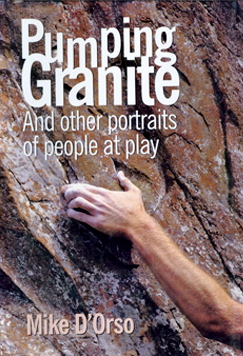
Among his writings, some of my favorites include sports journalism stories from Pumping Granite. A big favorite is “The Project and the Park,” the story of an evening at Tidewater Gardens, the housing project near Harbor Park in Norfolk, Va. Harbor Park was new when the story was penned for The Virginian-Pilot.

Here’s the lede, which instantly establishes two settings, the distance between them, and a main character:

It was an hour-and-a-half before game time at Harbor Park. The bleachers were empty, the grounds crew had yet to chalk the foul lines, but Catherine Newby was already settled into her seat – behind third base, beyond the left field parking lot, across ten lanes of interstate highway.

She’s 63, and has lived in the neighborhood for decades. Mike shows her appreciation for the park – the sound of music from the stadium, the lights in the sky. It’s a lesson in great reporting – not only going to a place and reporting through interviews and observation, though Mike is expert in such things, but also doing the research that allows telling detail within a narrative:

It is not a hopeful place. Nine out of every ten families living in its brick row buildings are headed by a single woman. Nearly half those households have an annual income of less than five thousand dollars. Ninety-seven percent of them are black.

None of which means a thing to Catherine. All she knows is this is her home. Those are her gardenias and petunias planted at the edge of her small concrete stoop. Those are her three metal folding chairs set up outside the screen door of her apartment. And that new stadium, its light towers looming above the traffic whooshing past on Tidewater Drive, is Catherine’s pleasure.

People from the neighborhood recall the story of opening night, as seen from there. There are scenes effectively, but it’s basically the narrative of the visit, interspersed with the game. The difference is a reporter with the ability to listen for great, telling quotes like this one:

‘Oh, what an evening!’ said Catherine. ‘You could hear the mayor, and Father Green, and the Star Spangled Banner. We all stood up and put our hands on our hearts when they played that. We sure did.’

Of course, not everybody is so thrilled, and the story ends with some real tension, and then also a gentle image seems to strike the right note while still being beautiful. I won’t spoil it, since you surely will go buy the book now. Anyways, I asked Mike a few craft questions about that story via e-mail. They follow.

Q: How did you find that story? Was that story assigned or hunted down?

Harbor Park was about to finally open, after months and months of construction, accompanied by dozens of stories about every aspect of the park, right down to how the hot dogs and buns would be shipped to the stadium.

It occurred to me, as I exited off I-264 one day, right by the ballpark, that this stadium literally cast a shadow over the housing project on the other side of the interstate – Tidewater Gardens. I thought about the fact that these people had watched this behemoth grow right before their eyes, and that it was a symbol of the monstrous class-and-economic divide that exists in America today between the ‘haves’ and the ‘have-nots.’ I doubted that many residents in Tidewater Gardens could afford a season ticket – or even the cost of a single game (including the exorbitant cost of concessions at a ballgame). In other words, though these people lived closer to this stadium than anyone, it may as well be a universe away.

Frankly, it also angered me that whenever The Pilot did a story involving a community like this, the reporters always interviewed and quoted the ‘usual suspects’ – a couple of community leaders and local politicians who always ‘spoke for the people,’ rather than approaching and allowing some of the people to speak for themselves. This was certainly the case in the one or two stories The Pilot had done in the previous months concerning the neighborhoods near Harbor Park – including Tidewater Gardens.

So I got Lawrence Jackson, a brilliant photographer with The Pilot at the time (and now an official White House photographer), to join me, and we simply went over to Tidewater Gardens on the night of a home game and roamed the neighborhood from about 5 p.m. (a couple of hours before game time), all the way till the final out was made, at about 9:30 or so.

We just played it by ear, chatting with people we happened upon, talking with them about their feelings concerning the ballpark, and always, inevitably, having the conversation expand into their feelings about their lives in general and about their community.

One point I hoped the story would make, although this wasn’t a stated or intended agenda, was to show that this community and so many like it – which are so often reduced to the broad, sweeping, and negative stereotypes that accompany terms such as “inner-city,” “public housing,” and “project” – is not filled with just crime, violence and poverty, but is also home to people and families, who have the same values, wants and needs as people in any other community … people who care about their neighbors, who take care of one another because so much care is needed and so little is provided, and who, yes, would love to be able to have a seat in that stadium over there and take in a ballgame. If they can’t do that, Lawrence and I found, some of them do the next best thing, pulling a chair outside the front door of their rowhouse, tuning the radio to the ballgame, and enjoying the evening like any other fan, some even standing for the national anthem, just like the people under the lights over there, across the highway. Just normal, ‘good’ people, making the best they can of their lives – that’s what that story boiled down to.

Q: How did you begin reporting it? Did you research the neighborhood or just drive out there?

I always like to do as much research as I can before going out for the actual ‘reporting.’ This gives me some understanding of particular issues, an idea of some issues I might want to explore, and it also gives me a few nuggets of fact that I can sprinkle throughout the narrative – not so many that they bog down the story to the point where it reads like a government study, but enough to illuminate a particular scene.

That old writers’ saw about ‘show, don’t tell,” should actually be “show AND tell,” in just the right proportion.

Q: You use numbers very quickly and very effectively in the story, to make a sort of point that quickly is humanized by shifting back to the people in the narrative. At what point did you gather your statistics on the neighborhood?

As I said, I gather a good amount of statistics before I go out and report. Then, when I come back,  I’ll almost always find myself looking up a specific fact or statistic I didn’t have before, prompted by something seen or said while I was out ‘in the field.’

Q: Why did you think this was an important story to tell?

I think I answered this earlier.

Q: What was the editing process on this story?

Very little, if any.

Q: Did it change from the first draft?

Very little, if any.

Q: Did you outline? Why?

I always outline before I write. I believe it’s always necessary to have some kind of map to follow. Nothing rigid. I ‘outline’ much like a filmmaker ‘storyboards’ his movie. That’s how I arrange and prepare a story prior to writing. I think in terms of scenes, very much like a filmmaker. Once I’ve arranged my ‘scenes,’ I then take my raw material – research, ‘field’ notes, etc. – and distribute it among the scenes, putting this quote or factoid in this scene, and that quote or factoid in that one, and so on. Then I begin to write, always with the flexibility that the scenes might be reshaped, rearranged, or restructured as I go along.

Again, you can learn more about Mike’s writing and books here. And this is the link for his new book with Ted Danson.

Tagged , , , , , , , , , , , , , , , , , ,