Tag Archives: journalism

Belligerent Q&A, Vol. VI: Columnist Mike Gruss of The Virginian-Pilot


Would you buy tapioca from this man? I did, and how. Now I have too much tapioca. Thanks a lot, Mike Gruss, features columnist at The Virginian-Pilot newspaper in Norfolk, Va. Courtesy photo.

As the columnist for The Daily Break – feature – section of The Virginian-Pilot newspaper, Mike Gruss has been followed around by a ringmaster. He has compared a Jeopardy champ to one of America’s famed wearers of the John Henry name. And he has written with wit and heart about the things that make the Hampton Roads, Va., region a great place to live, even when our local governments appear to be in a stupid contest.

And he does this three times a week, even. Not too shabby.

Gruss was kind enough to agree to answer a few questions via email. As always, there were no backsies.

Q: Just who do you think you are? Please use three examples in your response.

  1. Alex Trebek. Wait. That’s probably what everybody says.
  2. Do you remember that one scene in Field of Dreams? No, not the one with Kevin Costner. No, not the one with James Earl Jones. Right, Burt Lancaster as Moonlight Graham. Now remember the guy who sold the unnecessary hats to Moonlight Graham’s wife. That’s who I like to think of myself as.
  3. Also, former William & Mary quarterback Lang Campbell.

Q: Tell us about this newspaper technology all the kids are talking about.

Ayech-tee-tee-pee-colon-backslash-backslash-doubleyou, doubleyou, doubleyou, dot, pilotonline, all-one-word, dotcom, slash, gee, are, you, ess, ess. Or facebook.com/gruss. Or twitter.com/mikegruss.

Q: Until a recent misunderstanding, I savored dressing like a ringmaster and repeating people’s orders in the cafeteria of the bus station at Granby Street and W. Brambleton Avenue. Naturally, I enjoyed your recent excursion with Ringling Bros. ringmaster Brian Crawford Scott, who, for a living, trades in what someone with a tendency to misapply musical terminology might call in relievo: “Your literary genius will be eternalized.” Can you explain the experience? And how did you look in that jacket? Be sure to speak up.

Brian was a great hype-man. The energy and language he brought to the most boring tasks we presented him far exceeded my expectations. Having him trail me for a couple of hours meant a lot of awkward stares, but it was worth it. Plus, that jacket was the awe-some, especially if you’re really into steampunk. It was also heavy. And made with real Svarokvski crystals. I didn’t get to wear it. In fact, I believe it was the first time it was worn outdoors because it’s worth a boatload of money. I was nervous he would trip on the sidewalk and rip a hole in his pants.

Q: You recently wrote about the hot Southern brand. As a transplant, do you feel the South’s marketing push slowly sinking into you like brine into the supple hide of a cuke? (Extra “unpaved street cred” credit: To paraphrase Insane Clown Posse: Freaking grits – how do they work?)

I disagree with the premise of the question. While, yes, technically, I am a transplant because I was not born here, and while yes, I still cheer for Cleveland-based sports teams, at point does one get to claim a stake in the South as their own?

I’ve lived here eight years. I’ve paid more taxes in Virginia than in any other state. I’ve made more charitable donations in Virginia than any other state. I’ve been called for jury duty twice in Virginia. (None in Ohio, Indiana, Wisconsin, or Illinois, where I’ve also lived.) I’ve voted more times in Virginia than any other state. My wife and I own a house. When do I get to start identifying myself as a local?

Haha! You said cuke. I don’t know what that means. Maybe I am a transplant?

Regarding grits, would it be too stuffy, too inside baseball to respond: ‘Nobody does, man! Grit force, man. What else is similar to that on this Earth? Nothing! Grit force is fascinating to us. It’s right there, in your face. You can feel them pulling. You can’t see it. You can’t smell it. You can’t touch it. But there’s a force there. That’s cool!’

Q: When do you think the Norfolk Police Department will let me and my tasteful example of haute couture go back to the bus station cafeteria?

Have you tried Megabus?

Q: When Mal Vincent says “we” in his movie reviews, whom else is he talking about? Can only he see them?

Wait, what? You seriously didn’t know? Ha! I thought this was common knowledge. The other half of the ‘we’ is Pippa Middleton, of course.

Q: In my imaginary exit interview at The Pilot, I suggested they turn my cube into a gift shop. What would you like them to do with your desk when you retire?

Build a Viking ship. Wait. That’s probably what everybody says. Build two Viking ships. I have a big desk.

Q: We’ve covered so much ground here. What else would you like to say?

I’m honored The New York Times Magazine thought me worthy enough to include in the Q&A section. This is a great honor and the culmination of a lifelong dream.

In closing, here is the greatest music video ever. This is not safe for work. Also, it will make you stupid. I don’t mean over time, either, but immediate stupidity. Frankly, you should not watch it. You are making your own bed if you click on this video. I know you’ll make the right decision:

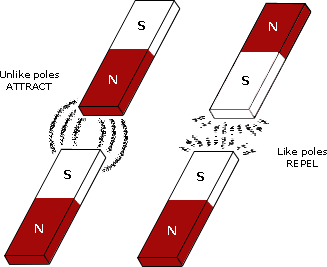
How magnets work:

Tagged , , , , , , , , , , , , ,

Earl Swift shall rock you Thursday at the TCC lit fest in Norfolk, though in this headline ‘rock’ = ‘read to’


Norfolk, Va., author and journalist Earl Swift now has a more active name. His old-country handle? Earl Lentissimo. Photo by Saylor Denney.

Norfolk, Va., author and journalist Earl Swift, formerly of The Virginian-Pilot, will read on Thursday as part of Tidewater Community College’s 10th Annual Literary Festival.

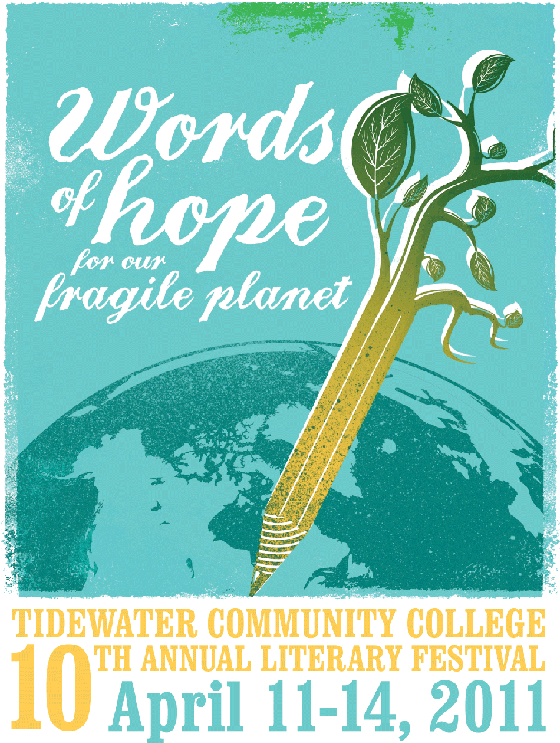
The festival’s theme is “How words can help consume delicious natural resources.”

Wait, I have that all wrong. TCC’s lit fest theme is really “Words of hope for our fragile planet.” Maybe next year.

But back to Swift.

He’s an award-winning journalist. His work has appeared in Parade and Best Newspaper Writing. In 2007, some of his best stories were collected in The Tangierman’s Lament. He’s also the author of the riveting Where they Lay: Searching for America’s Lost Soldiers, and Journey on the James: Three Weeks Through the Heart of Virginia, which began as a newspaper collaboration with photographer Ian Martin.

Swift’s latest book is due to be published in June. It’s called The Big Roads: The Untold Story of the Engineers, Visionaries, and Trailblazers Who Created the American Superhighways. If I’d had a subtitle that long back in high school, I would have been more popular.

This past weekend, Swift said he was still choosing the selections he will read Thursday, but was leaning toward something from The Tangierman’s Lament, something from The Big Roads, and a project that is in the works. The latter piece is one he hasn’t read in public before. He hasn’t read anything from The Big Roads, either.

He’s looking forward to Thursday:

The festival has a theme: ‘Words of hope for our fragile planet.’ I’m kind of bound to make selections that are connected to the theme. That’s something that has made me come up with stuff that I normally wouldn’t do.

You can read more about Swift at this link to his website.

The Big Roads is a history of how the U.S. interstate highway system came to be, and how it “changed the face of a continent.” To me, that fits in well with TCC’s theme. Nothing bucks up a wimpy planet like a thorough paving.

Should be a great lit fest. By the end of the week, pretend experts say, the Earth will be 5 percent sturdier. And, forever more, space children will taunt Earthlings thusly:

Your planet’s so fragile TCC called it out in a literary festival theme.

The reading is at 12:30 p.m., Thursday, April 14, at the TCC Roper Performing Arts Center, 340 Granby St., Norfolk. Free admission. Info at (757) 822-1450. There is some metered street parking but the best bet at lunchtime downtown is one of the garages, either at Freemason and Boush streets, or at MacArthur Center.

Some of Swift’s books will be available for sale, too.

Tagged , , , , , , , , , , , , , , , , ,

The Newseum


Newseum entrance, Washington D.C., March 15, 2011. Vox Optima photo.

I visited the Newseum yesterday with several folks from Vox Optima, the first time I’ve seen it the museum in it’s relatively new location on the 500 block of Pennsylvania Ave. N.W.

Among the great exhibits was Covering Katrina, on display until September. It’s a very moving series of displays that included front pages from throughout the initial period of the storm, examinations of the reporters covering the tragedy, and, for those overcome by some very powerful images, boxes of tissues at the end of benches.

Said Jim Washington, a former reporter for The Virginian-Pilot and my colleague at Vox:

It was pretty amazing. I was surprised how emotional the Katrina exhibit was, especially since its a news story we’ve been exposed to for so long.

A great museum. Worth checking out if you’re in D.C.

A few images from the trip follow.

A view from one of the upper levels. To the left is a recreation of the office of the late NBC journalist Tim Russert. Vox Optima photo.

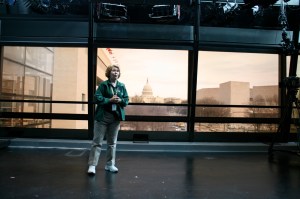
Jane Howard of the Newseum discusses the ABC This Week studio in the museum in Washington D.C. on Tuesday.

Detail of a section of the Berlin Wall, on display at the Newseum, Washington D.C., on March 15, 2011. Vox Optima photo.


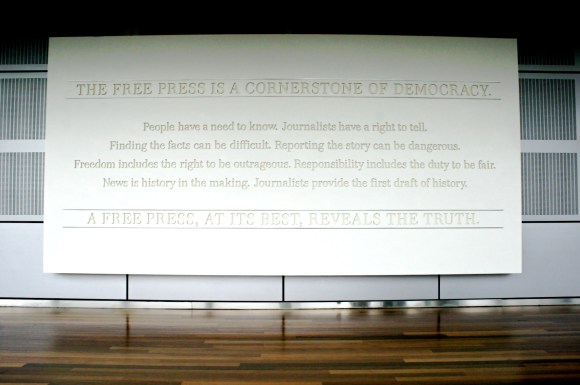
Well said ... at the Newseum, Washington D.C., on March 15, 2011. Vox Optima photo.

Tagged , , , , , , , , , , , ,

Writing Craft, Vol. I: Mike D’Orso’s “The Project and the Park”


Mike D’Orso and I had a little fun the other day regarding his new book, written with the actor and activist Ted Danson.

I also asked via email about the craft of feature journalism writing. His answers are reflected in this post.

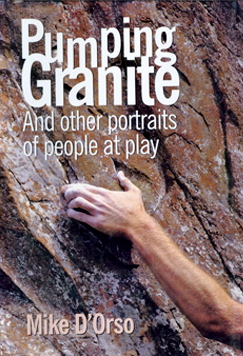
Among his writings, some of my favorites include sports journalism stories from Pumping Granite. A big favorite is “The Project and the Park,” the story of an evening at Tidewater Gardens, the housing project near Harbor Park in Norfolk, Va. Harbor Park was new when the story was penned for The Virginian-Pilot.

Here’s the lede, which instantly establishes two settings, the distance between them, and a main character:

It was an hour-and-a-half before game time at Harbor Park. The bleachers were empty, the grounds crew had yet to chalk the foul lines, but Catherine Newby was already settled into her seat – behind third base, beyond the left field parking lot, across ten lanes of interstate highway.

She’s 63, and has lived in the neighborhood for decades. Mike shows her appreciation for the park – the sound of music from the stadium, the lights in the sky. It’s a lesson in great reporting – not only going to a place and reporting through interviews and observation, though Mike is expert in such things, but also doing the research that allows telling detail within a narrative:

It is not a hopeful place. Nine out of every ten families living in its brick row buildings are headed by a single woman. Nearly half those households have an annual income of less than five thousand dollars. Ninety-seven percent of them are black.

None of which means a thing to Catherine. All she knows is this is her home. Those are her gardenias and petunias planted at the edge of her small concrete stoop. Those are her three metal folding chairs set up outside the screen door of her apartment. And that new stadium, its light towers looming above the traffic whooshing past on Tidewater Drive, is Catherine’s pleasure.

People from the neighborhood recall the story of opening night, as seen from there. There are scenes effectively, but it’s basically the narrative of the visit, interspersed with the game. The difference is a reporter with the ability to listen for great, telling quotes like this one:

‘Oh, what an evening!’ said Catherine. ‘You could hear the mayor, and Father Green, and the Star Spangled Banner. We all stood up and put our hands on our hearts when they played that. We sure did.’

Of course, not everybody is so thrilled, and the story ends with some real tension, and then also a gentle image seems to strike the right note while still being beautiful. I won’t spoil it, since you surely will go buy the book now. Anyways, I asked Mike a few craft questions about that story via e-mail. They follow.

Q: How did you find that story? Was that story assigned or hunted down?

Harbor Park was about to finally open, after months and months of construction, accompanied by dozens of stories about every aspect of the park, right down to how the hot dogs and buns would be shipped to the stadium.

It occurred to me, as I exited off I-264 one day, right by the ballpark, that this stadium literally cast a shadow over the housing project on the other side of the interstate – Tidewater Gardens. I thought about the fact that these people had watched this behemoth grow right before their eyes, and that it was a symbol of the monstrous class-and-economic divide that exists in America today between the ‘haves’ and the ‘have-nots.’ I doubted that many residents in Tidewater Gardens could afford a season ticket – or even the cost of a single game (including the exorbitant cost of concessions at a ballgame). In other words, though these people lived closer to this stadium than anyone, it may as well be a universe away.

Frankly, it also angered me that whenever The Pilot did a story involving a community like this, the reporters always interviewed and quoted the ‘usual suspects’ – a couple of community leaders and local politicians who always ‘spoke for the people,’ rather than approaching and allowing some of the people to speak for themselves. This was certainly the case in the one or two stories The Pilot had done in the previous months concerning the neighborhoods near Harbor Park – including Tidewater Gardens.

So I got Lawrence Jackson, a brilliant photographer with The Pilot at the time (and now an official White House photographer), to join me, and we simply went over to Tidewater Gardens on the night of a home game and roamed the neighborhood from about 5 p.m. (a couple of hours before game time), all the way till the final out was made, at about 9:30 or so.

We just played it by ear, chatting with people we happened upon, talking with them about their feelings concerning the ballpark, and always, inevitably, having the conversation expand into their feelings about their lives in general and about their community.

One point I hoped the story would make, although this wasn’t a stated or intended agenda, was to show that this community and so many like it – which are so often reduced to the broad, sweeping, and negative stereotypes that accompany terms such as “inner-city,” “public housing,” and “project” – is not filled with just crime, violence and poverty, but is also home to people and families, who have the same values, wants and needs as people in any other community … people who care about their neighbors, who take care of one another because so much care is needed and so little is provided, and who, yes, would love to be able to have a seat in that stadium over there and take in a ballgame. If they can’t do that, Lawrence and I found, some of them do the next best thing, pulling a chair outside the front door of their rowhouse, tuning the radio to the ballgame, and enjoying the evening like any other fan, some even standing for the national anthem, just like the people under the lights over there, across the highway. Just normal, ‘good’ people, making the best they can of their lives – that’s what that story boiled down to.

Q: How did you begin reporting it? Did you research the neighborhood or just drive out there?

I always like to do as much research as I can before going out for the actual ‘reporting.’ This gives me some understanding of particular issues, an idea of some issues I might want to explore, and it also gives me a few nuggets of fact that I can sprinkle throughout the narrative – not so many that they bog down the story to the point where it reads like a government study, but enough to illuminate a particular scene.

That old writers’ saw about ‘show, don’t tell,” should actually be “show AND tell,” in just the right proportion.

Q: You use numbers very quickly and very effectively in the story, to make a sort of point that quickly is humanized by shifting back to the people in the narrative. At what point did you gather your statistics on the neighborhood?

As I said, I gather a good amount of statistics before I go out and report. Then, when I come back,  I’ll almost always find myself looking up a specific fact or statistic I didn’t have before, prompted by something seen or said while I was out ‘in the field.’

Q: Why did you think this was an important story to tell?

I think I answered this earlier.

Q: What was the editing process on this story?

Very little, if any.

Q: Did it change from the first draft?

Very little, if any.

Q: Did you outline? Why?

I always outline before I write. I believe it’s always necessary to have some kind of map to follow. Nothing rigid. I ‘outline’ much like a filmmaker ‘storyboards’ his movie. That’s how I arrange and prepare a story prior to writing. I think in terms of scenes, very much like a filmmaker. Once I’ve arranged my ‘scenes,’ I then take my raw material – research, ‘field’ notes, etc. – and distribute it among the scenes, putting this quote or factoid in this scene, and that quote or factoid in that one, and so on. Then I begin to write, always with the flexibility that the scenes might be reshaped, rearranged, or restructured as I go along.

Again, you can learn more about Mike’s writing and books here. And this is the link for his new book with Ted Danson.

Tagged , , , , , , , , , , , , , , , , , ,

Belligerent Q&A, Vol. I: Mike D’Orso


Norfolk, Va., author Mike D’Orso’s new collaboration with the actor and environmental activist Ted Danson will be published March 15.

Oceana: Our Planet’s Endangered Oceans and What We Can Do to Save Them is Mike’s 11th “collaborative book,” and he has written five of his own.

Previous collaborative subjects include former New York Jets player Dennis Byrd, former U.S. Senate Majority Leader Tom Daschle, D-S.D., and civil rights pioneer and current U.S. Rep. John Lewis, D-Ga.

Mike’s working on a memoir and how-to book now. The working title is WITH… : The Long Strange Trip of a Professional “Ghost” Writer.

Mike agreed to answer a few questions by email. Only after he received the questions did he realize there were no backsies.

Q: Just who do you think you are? Please use three examples in your response.

It often depends on the day – sometimes on the hour. At the moment, I am:

  1. A proud father (of my 26-year-old daughter, Jamie)
  2. A 14-handicap golfer (it’s been a long winter–a lot of rust to shake off)
  3. Hungry (it’s almost time for lunch)

Q: Apparently our planet’s oceans are endangered. What can we do to save them?

The first step is realizing the numerous ways in which the oceans are threatened, the extent of those threats, and how truly catastrophic the consequences will be if something (many things) aren’t done and done soon.

There’s no room here to list the dozens of courses of action that we as individuals (not just Americans, but all people), that our government (not just the U.S. government, but the international community), and that the global fishing industry can and must take to stem the tides of overfishing, ocean acidification, marine habitat destruction, insidious government subsidies, and corruption among commercial fisheries that threaten to turn the oceans into nothing but watery deserts within the next half-century.

Q: Regarding Ted Danson, how handsome is too handsome?

I believe the definitive answer is provided in the video found at this link in which Ted, of course, makes an appearance. (About two minutes in.)

Q: If we submerge Oceana: Our Planet’s Endangered Oceans and What We Can Do to Save Them in water, will it expand into a giant sponge shaped like a commercial fishery?

Are we talking sea water or fresh water?

Q: The book lists for $32.50 in the U.S. and $37.50 in Canada. Do Canadians care 15 percent more than do Americans about the oceanic biosystem?

No. There’s a dirty little secret in the publishing industry at work here … it’s called the ‘Uncle Sam Discount.’ (The statute was hidden deep in the pages of the Patriot Act.)

Q: We’ve covered so much ground here. What else would you like to say?

Time for lunch!

If you followed Mike’s link to that video above, and either are a patient individual or reading this at work, you may have realized by the fifth minute that too much handsome cannot save too little funny.

Mike answered a few more questions on one of my favorite journalism stories from his days at The Virginian-Pilot, collected in his book Pumping Granite. I’ll post that this weekend.

A site for the new book is here. Mike’s own site is here.

Tagged , , , , , , , , , , , , , , , , ,

Publication rights and the Web


I published a short story many years ago that involved a respectable enough literary review, a contract and a sum of money for first-publication rights.

This was before the Web was an issue. Back then, everything was made of wood, you see.

Now, for the second time since the online age began (really the past few years, in my case), I’ve found a subscription archival service that effectively is republishing (selling, among many other works) access to PDFs of my work, though I own the sole rights to this story.

I’m not sure how big a deal to make of this, but it reminds me of issues I’ve had with reproduction of my freelance (and, come to think of it, staff) journalism work, such as republication of an old story in a “sister publication” without explaining the original context.

If any of my writer or photographer pals have had similar experiences or know of anyone who has, I’d be glad to know via email.

I might write about it. I’m at jhdouc@verizon.net.

Tagged , , , , , , , , ,

On AltDaily’s “If You Read the Paper”


A new essay is posted at TReehouse Magazine on a great feature at AltDaily, a local alternative news and opinion website in the Hampton Roads, Va., region.

The (week)daily feature is a regular stop for me when I surf online. As the essay says:

(If You Read the Paper) has shown itself to be a flexible, funny, often astute barometer of local news, how it is gathered, and how the gatherers may fall short.

This essay followed up on some reporting (some might say bloviating)  I did about a year back on the local alternative outlet scene, and my hope that they would cover the health, importance and quality of The Virginian-Pilot, our local daily paper and my former employer.

As the essay notes, Jesse Scaccia of AltDaily had a much better idea. Hope you’ll check out the feature, TReehouse (run by former PortFolio Weekly editor Tom Robotham) in general, and AltDaily, too.

Links to some other essays and journalism I’ve written for Tom are on the right rail of this blog.

In other local alternative media news, Jeff Maisey of Veer Magazine, an alternative monthly print pub and online outlet, has launched Afr-Am, a new pub aimed at the African American community.

Haven’t seen it yet, but it’s supposed to be on the stands around town. We had another pub around here called Mix that Landmark, the company that runs The Pilot, did, but it folded.

Tagged , , , , , , , , , , , , , , , , ,

A news tax on fast food?


I recently wrote about the issue of subsidies for public-interest news gathering for TReehouse. Though I realize there is little chance such subsidies will be realized given the current political climate, I support the idea as a way to help ensure public-interest journalism remains viable.

AltDaily, an alternative news website in Hampton Roads, Va., has a somewhat related discussion going at its Facebook page about whether folks might support a fast food tax to fund investigative reporting at The Virginian-Pilot.

The discussion, as I write this, shows that some folks do not understand that news gathering organizations, including corporate ones, have historically been subsidized by various forms of government. Some remain so today, both directly and indirectly.

My feeling continues to be that this has not demonstrably been shown to cause an ethical conflict that is in any way different than those conflicts facing news organizations covering corporate interests with which they engage in business relationships. Applying logic and caution might contain concerns about slanted or tainted coverage with subsidies of various types or sizes in place.

The potential for conflict, of course, is great. Potential conflict and realized conflict are two distinct matters. They should be treated as such.

Tagged , , , , , , , ,

Photo: Patriotic Bench in Cradock


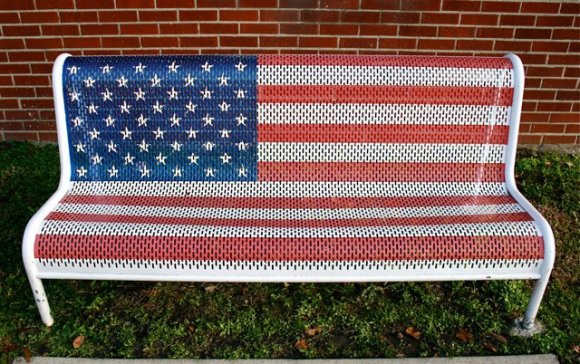
Patriotic bench outside the firehouse in Cradock, a community in Portsmouth, Va. Photo by John Doucette.

I shot this as part of research for a story, but it’s not the sort of thing that would get published. I just like the bench.

Cradock is a neat neighborhood. The streets were designed to resemble an anchor, which makes a lot of sense for our communities within Hampton Roads, Va. Some history is available here.

Tagged , ,

More on “The Case for Publicly Financed Journalism”


Short blog post for the company is here, with links to the longer essay at TReehouse.

Tagged , , , , , , , , ,