The shop prides itself on its collection of books on or about Darwin and its purposeful marriage of works on the sciences and the humanities. One display near the front door contained Donald Johanson and Maitland Edey’s paleoanthropology book Lucy: The Beginnings of Humankind, resting next to Eugene O’Neill’s play Long Day’s Journey Into Night. A bust of Aristotle is not far from the checkout desk. And a remarkable display case, a remnant of the building’s past as a jewelry store, contains enough texts and items of scientific interest that you could spend a full visit examining that alone.
It is run by George Siscoe and Nancy Crooker, a couple. Both are research professors affiliated with Boston University after years on the West Coast.
It’s been a gift. It’s so different from what we’ve done in the past.
Siscoe gives a tour of the store in a video below, addressing his goals of collecting “foundational books.” (Email subscribers to this blog may have to view it on the online version.)
Siscoe said:
It’s a small store, as you see, and so I’ve divided it into two halves. This side has the science side, so I call that the ‘what is’ side. And that side is the humanities side, so I call that the ‘what matters’ side. You need both what is and what matters to be a rounded person. That’s the connection.
One reason I loved this store, and am writing about it here, is that it pushed me outside my comfort area, which is what great bookstores (and great professors, for that matter) can do.
My reading tends to be squarely on the humanities side, and it’s fairly limited to writing, journalism, history, sports, and literary titles. Plus Elmore Leonard. On Siscoe’s recommendation, I picked up several science books, including The Life of the Grasshopper by the French entomologist Jean Henri Fabre. The book’s first line:
Fame is built up mainly of legend; in the animal world, as in the world of men, the story takes precedence of history.
Fabre uses his initial chapter to discuss folklore and storytelling. The he revises that narrative, gently but strongly based on science, observation, and his own storytelling. I couldn’t put it down, and bought another Fabre book the next day. Chances are, my opportunities in scientific research remain slim, but I have a better understanding of Fabre’s topic and works, which I probably would not have explored otherwise, and I learned a bit about writing and storytelling from an entomologist.
My trip to Belfast coincided with the first days of the Belfast Bound Book Festival, and an estimated 25,000 volumes were for sale in many stores in the immediate area.
Belfast also hosts an annual poetry festival in October and has an active arts community. If you ever head to Belfast, there is some book hunting to be done at several locations. If I head back next summer, as tentatively planned, I’ll start my hunting with Old Professor’s Bookshop, since that’s where I did all of my book buying this year.
The store is open from 10 a.m. to 4 p.m., Tuesday through Saturday, (207) 338-2006. Worth checking out.
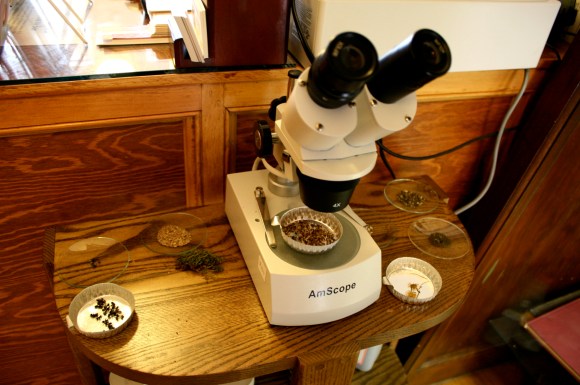
The microscope near the checkout desk, and a few samples to examine.
I spoke with Norfolk, Va., fiction writer John McManus earlier this week for a Belligerent Q&A. This is a follow up with some of his responses to questions emailed earlier this summer.
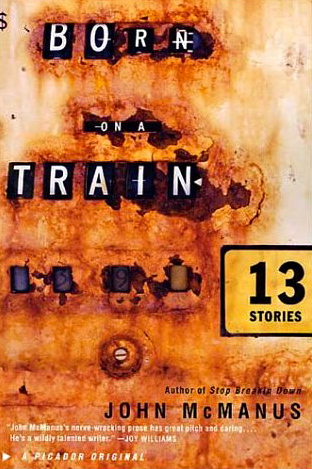
In addition to being a wonderfully wise, insightful and encouraging educator, McManus is the author of a novel, Bitter Milk, and the short story collections Born on a Train and Stop Breakin Down.
Q: I hoped to focus on one story, “Mr. Gas,” before asking some more general questions. Generally speaking, the story deals with a teen’s relationship to his homebound mother and a relationship with a boy who works at the Mr. Gas, where he buys milk for Mama. This originally was to be a larger work. What did you originally envision the story to be?
The story is all that remains of a terrible novel draft I wrote in the winter and spring of 2000.
Q: What led you to reconsider “Mr. Gas” as a short story? How did you refocus the story?
In March 2001, when I sat down to revise the novel, I started deleting the parts that made me cringe to read them. After two weeks I was left with about ten pages. As I recall, I had the Radiohead song ‘Nice Dream’ on repeat during this process, which helped in my effort to refocus, if not to focus.
Q: There are a number of images that strike me in the story, but one of my favorites is Jason’s journeys to get milk for his mother. Given the apparent roles in their relationship, this simple mission, undertaken for various reasons, really resonated with me. Would you talk about how you develop images that are both concrete and how you find them within the story, if that is the case?
I hope you won’t think me disingenuous for saying I can’t talk successfully about how I developed images in ‘Mr. Gas,’ because I don’t seem to have conscious memories of craft choices I made while writing it. In general I’d say I try to enter a meditative state where I can just stare semi-absently at things until the solutions strike me, and then do that again and again until finally, if the story ever comes to feel right, some metaphorical systems will have magically developed that function together properly in a way that makes both literal and figurative sense. Since this lucky process happens once in a while when I write stories, I’ve wasted time in the foolish hope that it might occur in a novel as well. But novels turn out to be a different deal.
Q: There’s a real history to the characters, especially Mama and Jason, that comes across seemingly effortlessly and informs the events and certainly informs the events of the story. Sometimes I struggle with making the past of characters come across. How are some ways you address that issue without engaging in large stretches of backstory?
I think I tried to make the characters’ pasts implicit in what they desired and lacked and yearned for and wished had happened and dreamed.
Q: I’ve struggled with whether to discuss the ending, because I hope people will find the story. Safe to say, there was a bit of surprise to it in how it explores what Jason seems to want or has been programmed by to want and fear – so even that possibility that an object of desire might have feelings back, something that simple becomes a revelation and a source of conflict. When I say “surprise,” that may not be the word, because groundwork is within the narrative, but it was presented in a way I had to think about. It’s not simple, which, of course is a point of literature compared to, say, a potboiler. Do you work toward that kind of complexity going into it? Does it come about naturally?
In general I tend to structure a story somewhat like this: the main character, in this case Jason, wants something, maybe wants it so desperately that it seems downright out of the question. Various types of conflict bear down on him to prevent him from getting the thing he wants. He struggles forward anyway, dealing with more and more kinds of conflict (as well as more and more of those kinds of conflict) until it seems impossible to proceed. At this point the climax has to happen in a manner that answers whatever question the story has been asking (the question typically being ‘will the character get the thing he wants?’). For the climax to be satisfying, it has to seem both surprising and inevitable. One way to do this is for a thing that has seemed inevitable to happen in a surprising way. Another way is to show that the character has been believably blinded to the inevitable until a climactic moment when the thing that has blinded him somehow vanishes like an evanescent fog.
Q: I love the idea of writing down the opposite of what happened in a journal, and the idea of multiple truths, and how this comes back so organically in the story. Did you have that idea early on or was that something you found in the process of writing?
The opening line, about Jason’s mother telling him the way to keep a journal is to write the opposite of everything that happened, sounded good to me at the time, but now I look back and find it cloying and trite. I’m glad you love the idea, but it makes me cry inside to think about it, as it does to look back at almost anything I wrote this long ago. At least you chose a story from Born on a Train. My first story collection, Stop Breakin Down, seems no better than juvenilia to me now, and if you ever read so much as one story from it, there will be no old-timey photo booth and no Dippin’ Dots.
Q: You tell your students to write every day. Why is this so important? How do you make time?
If you’re not currently working on a project, it might not be so important to write every day; you could take six months off and come back and start anew and that would be fine. But if you’re writing a novel or a story, its setting and mood and style and plot are things you’re teaching yourself fluency in, the way you teach yourself fluency in a language. With any language you’re studying now or that you attained post-adolescence, you’ll start to forget it little by little after just a single day of not speaking or thinking or reading it.
Q: Where do you prefer to write? For example, I can write just about anywhere but I despise interruptions and certain kinds of noise. It can be tough for me to focus.
In October I bought a house in Colonial Place, and I use for my office an upstairs spare bedroom through whose windows I can see crepe myrtles, pine trees, the sunrise, the street, Haven Creek. This is far and away where I prefer to write. For two years in Norfolk I lived in houses that for various reasons weren’t conducive to serious creative thought, and so I sought a cafe where I liked to work. Nothing felt right. There are some new coffeeshops that might have served me well in 2008 and 2009, although you’re right that in public noise can always be a problem; these days I like to write in silence.
Q: I tend to play with dialogue, hoping to find characters in exchanges, and I practice writing full paragraphs. Do you still do writing exercises? How do you experiment?
In the early stages of writing a novel there’s plenty of exploratory writing during which I let characters think things or do things that almost certainly won’t wind up in the final draft.
Q: Who are you reading?
Today I finished The Literary Conference by César Aira, an intriguing little novella about a writer and mad scientist whose quest to clone Carlos Fuentes goes desperately wrong and threatens to destroy the city of Mérida, Venezuela, and probably the world. In my backpack is Lie Down in Darkness by William Styron, which I’ll start reading when I finish answering these questions. My favorite new novel so far in 2011 is Open City by Teju Cole.
Q: What are you working on now?
I’m close to finishing a novel that I’ve been rewriting steadily since May of last year, at which time it had lain untouched since 2006 in the form of a sprawling, baroque, and semi-unreadable 700-page draft. Today it’s a svelte 370 pages. When it’s truly done, I’ll turn my full attention to Cooch: The Musical. Also I’ve got about five stories left to write or revise in a new story collection. One of those stories, ‘Blood Brothers,’ will appear this fall in the anthology Surreal South ’11. You can read a slightly different version of it in Rusty Barnes’s excellent Appalachian literature blog “Coffee and Fried Chicken.” Another story called ‘The Ninety-Sixth Percentile’ came out in The Harvard Review this year.
Q: One of the things I’ve enjoyed about the MFA program is reading and critiquing the work of other students. I learn a lot by considering other people’s work, and by hearing their responses to my work, in addition to critiques from professors. Do you share work with peers? What do you look for in criticism? What do you dislike?
It’s been a while since I’ve shared work with peers, but I’m preparing to show my novel to a few friends. I guess at this stage the criticism I’m looking for most would regard what’s missing, unclear, tedious, implausible, lugubrious, or overly obvious.
Q: You are one of the organizers for this year’s literary festival. Is there anything you can tell us about the lineup or the theme at this point?
The theme is ‘The Lie That Tells the Truth.’ The schedule is online. Guests include Megan Stack, Joy Williams, Billy Collins, Naomi Shihab Nye, Young Jean Lee, Porochista Khakpour, Yola Monakhov, and Scott Heim.
Q: I’ve written about my regard for the work you are doing as a contributor to AltDaily. Why do you continue to take the time to contribute? Why does it matter to you?
I appreciate what AltDaily is doing for Norfolk. When they perceive that something’s missing in social or civic life here, they immediately go about filling in the hole. They’ve completed so many successful projects in 2010 and 2011 that I feel exhausted just pondering it. I contribute each week because I want AltDaily to succeed and because they let me write uncensored about whatever I want and because I admire many of their writers and because the weekly column lets me feel like I’m no longer wasting my life by spending hours on end reading political blogs.
Q: Is there anything else I should have asked but didn’t? Or that you’d like to discuss?
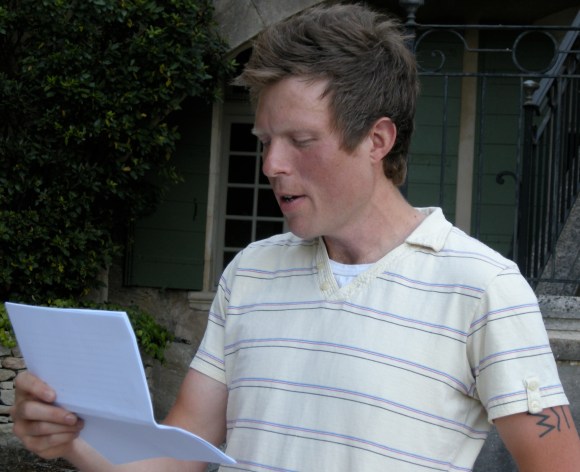
John McManus is reading in this photograph. Courtesy photo.
Norfolk, Va., novelist, short story writer, educator, and columnist John McManus visited France earlier this summer, dealing a crushing defeat to my dreams of getting this Belligerent Q&A posted in June 2011.
In America, we don’t look backwards, even if it’s only a month or so. We can’t get within 1,000 meters of a month or so, I think, because we don’t use the metric system. Or, say, go back to 1799, when France adopted it. Philosopher Concorcet once said: “The metric system is for all people for all time.” A prediction that was only off by an inch or so.
Let me note I was surprised to learn practicing one’s chosen art in the French countryside is more enjoyable than answering a series of foolish questions emailed by one’s student (well after the semester ends, granted ) for said student’s blog.
C’est très choquant!
And that’s right — McManus is one of my professors in the Old Dominion University MFA Creative Writing Program.
This is necessary full disclosure, but if you read this blog regularly (1) you are my Mom, suddenly computer literate, and (2) you already know I have more conflicts with these interviews than the Catholics had with the Huguenots from 1562 through 1598.
Zinged you there, France. (The Google translate function is giving nothing French for “zing.”)
Point being, McManus is the author of a novel, Bitter Milk, and the short story collections Born on a Train and Stop Breakin Down, and he earned the Whiting Writers’ Award in 2000.
And, look, I don’t want to overhype this, but this Belligerent Q&A is for all people for all time.
Et maintenant sur avec spectacle …
Q: Just who do you think you are? Please use three examples in your response.
This question has stymied me for weeks. My three examples of not knowing who I think I am: (1) the weeks I’ve spent unable to answer it, (2) Being and Nothingness, (3) my responses below.
Q: You are an award-winning fiction writer, an educator, a world traveler, and an AltDaily columnist. Do you consider yourself the less self-referential James Franco of Hampton Roads?
Scanning down to this second question before answering the first would have taught me who I am, although I would argue that a difference between Franco and me is that he wants to obtain a PhD whereas I do not.
Q: Your storied appreciation for the work of Virginia Attorney General Ken Cuccinelli has popularized a nickname, “Cooch.” I often dream that you and the attorney general will star in a by-the-numbers buddy cop show/procedural on CBS. What would your nickname be and why? What crimes would you like to tackle?
If, after my writing partner and I produce our forthcoming musical about Ken Cuccinelli, the attorney general remains willing to star with me in a buddy show, I’ll deem our musical to have failed. Let’s refashion the cop show in the iconoclastic-loner vein of cop dramas a la Dexter, although I’ve never watched Dexter and so could be wrong to assume that’s what he is. My character would be a forensic expert in an ancient Rome where forensic analysis is as advanced as ours albeit with mechanical equipment. The show would be filmed on location so I would move to Italy. Nickname: Rullus. As I contemplate this, I realize how much I’d like for Cuccinelli to play a character who worships pagan gods of antiquity, so I retract my earlier answer. There’s a role for him as a leery, superstitious coroner who spends his off-hours in the city’s many temples, making offerings to god after god.
Q: When two vowels go walking, which one does the talking?
Earlier I was listening to The National’s album Boxer and remembering how for years the LP was tainted in my mind by my belief that Matt Berninger was singing ‘your mind is racing like a pronoun’ rather than the real lyric, ‘racing like a pro now.’ That misheard lyric irritated me so much that I listened rather apprehensively to their 2010 album High Violet, waiting for similarly irksome lyrics. If I were to answer this question, someone might read my response and think thoughts about me that are similar to ones I thought unfairly about Berninger.
Q: When you take over for retiring U.S. Sen. Jim Webb, what will be your first three agenda items?
Taking down the gigantic pictures of Pat Robertson at the Norfolk Airport.
Taking down the ‘No Right Turn’ sign on southbound Llewellyn Avenue at the approach to Delaware Avenue. (Was there ever a more absurd ‘No Right Turn’ sign?)
Abolishing the electoral college.
Q: Why won’t The New Yorker publish my PBS NewsHour fan fiction?
When The New Yorker rejects a story of mine, I resubmit it as work of a different genre (e.g. dance critique, slice-of-life sketch, cartoon) and sign the cover letter ‘Malcolm Gladwell.’
Q: You are co-directing the Old Dominion University literary festival this year. How many days will be dedicated to Tami Hoag’s thriller Night Sins? And what else can we expect?
With apologies to Orson Welles’s 1970s-era Carlsberg beer ads, the ODU literary festival is probably the best literary festival in the world. Tami Hoag isn’t on this year’s schedule, but as you know I co-direct the festival with Michael Pearson and so I don’t have autonomy over these matters.
Q: If I make it through the ODU program and earn an MFA, will you and your fellow professors Janet Peery and Sheri Reynolds take me to one of those old-timey photograph places on the Virginia Beach strip? What costumes should we wear? Then can we go to Dippin’ Dots afterwards, please?
Yes. Shackleton and other Endurance crew members. Let’s play it by ear.
Q: France, huh?
In May I was in residence at the Dora Maar House in Menerbes, France, a hilltop village in the Luberon Valley about halfway between Avignon and Aix-en-Provence. The only non-wonderful part of this fellowship was having to leave at the end.
Q: By the time you come back, there may be a Chipotle in Ghent. Will you be extending your trip?
This question reveals how pathetically long it’s taken me to answer your questions.
Q: We’ve covered so much ground here. What else would you like to say?
It is a far, far better thing that I do, than that I have ever done; it is a far, far better rest that I go to than I have ever known.
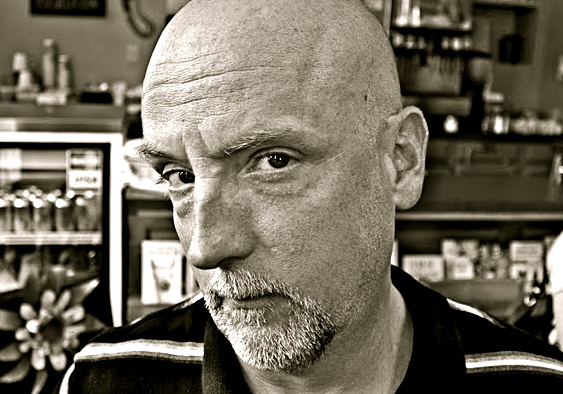
There's a world outside every darkened door/Where blues won't haunt you anymore/For the brave are free and lovers soar/Come ride with me to the distant shore/Here's a picture of Earl Swift/(Chorus) Life is a highway/I wanna ride it all night long/Photo by John Doucette
Back when Norfolk, Va., journalist and author Earl Swift was kind enough to participate in a mighty fun Belligerent Q&A here at the blog, I promised a more serious craft talk with him would follow.
This is it, starting below, and it couldn’t come at a better time.
His new film, in which anthropomorphic cars engage in an international spy adventure, has earned nearly $287 million at the international box office. This, despite the regrettable preproduction death of Paul Newman and the doubly regrettable continued involvement of Larry the Cable Guy, whose every utterance is the tonal reproduction of the sound a banshee makes when kicked in the throat. Oh, wait.
Yeah, I’m think of that new Pixar money grab. Swift wrote a terrific book that is 100 percent Larry the Cable Guy free.
Swift, formerly of The Virginian-Pilot newspaper, is also author of Journey on the James, Where They Lay, and The Tangierman’s Lament and Other Tales of Virginia. The Big Roads also has received favorable reviews in The Washington PostandThe Wall Street Journal.
And, by way of full disclosure, Swift and I are friends. Without further ado …
Q: Can you talk about how (The Big Roads) came about? What got you interested in the interstate system as a history?
Well, I’ve always loved road trips, and I’ve always been a bit of a techno-geek; I could identify most airliners by name, model number and manufacturer by the time I was ten, and could ID close to every tank used in World War II at 11 or 12. I could name pretty much every country on a globe, too. Some kids play sports; I memorized cubic yards of weird, arcane, seemingly useless crap.
I was fascinated to learn, at about the time I was perfecting my knowledge of tanks, that the interstate system boasted a numbering protocol, and I made it my business to commit some of the principal routes and numbers to memory. This was completely extraneous to my needs: I was years from getting my driver’s license; even when I got it, knowing such stuff came in handy only once in a very great while. Mostly, it occupied brain space that I would have done well to reserve for other matters. Calculus, for instance.
Fast-forward 30 years, and I’m watching a TV meteorologist serve up the morning weather, and I notice that his map of the Lower 48 has been reduced to its barest essentials—a few cities, the boundaries of the various states. And lastly, the interstate highways. At one point, any national map would have included principal rivers and mountain ranges. No longer: It features no topography at all.
It strikes me that I’ve come to see the country the same way, as a grid of high-speed roads. And that ushers a chain of mini-epiphanies: In the supermarket, I realize I can buy fresh asparagus and clementines and strawberries the year round; that a widescreen TV sells for about the same price in North Platte, Neb., say, as it does in New York; that Virginia Beach, the ultimate bedroom community, a quiltwork of subdivisions that covers a couple hundred square miles, was swamp and truck farms until the 1970s. Superhighways — the efficiency and ease of movement they offer — are the reason for all.
Not long after, I’m talking to an editor at Houghton Mifflin, an incredibly smart and gifted guy named Eamon Dolan. He’s been reading a proposal of mine in which I’ve pitched an entirely different book, and suggests that I instead tackle the interstates. It occurs to me that I’ve been preparing for the story. So I say: ‘OK.’
Q: There’s a great deal of history that coincides with your present-day reporting in Journey on the James, Where They Lay, and now (to some extent) this project, as well as some of your narrative features for The Pilot. What is it that draws you to history?
Living in Virginia, and especially in Norfolk — which has been settled since the 17th Century, and where every piece of property has been used and reused several times over — it’s hard to ignore the notion that our individual stories are part of a greater, never-ending narrative, and that each individual story is affected by those that came before and reverberates in some way to affect what comes after.
I find it reassuring, this idea that we’re all connected through time — that the environment in which we pass our days in 2011 is no accident, but the sum of human enterprise over centuries. And that each of us, however big or small our lives might seem, leaves a mark.
Q:This clearly was a very research and reporting-intensive project. Would you please talk about how you began this process? How did you determine where to gather records, and what was that process like?
In that it was Eamon’s idea, I had to figure out what the story was — like most Americans, I assumed that the interstates were a product of the Eisenhower administration, and that they were largely a civil defense project. It took about 18 months to figure out that they really dated to the 1930s, and were based on ideas that harkened a lot further back than that.
I started by reading everything I could get my hands on that had been published before, from Caro’s The Power Broker to Phil Patton’s Open Road to Jane Fisher’s Fabulous Hoosier. From there, I moved on to academic journals, then magazines. I was well aware that a book about an inanimate object, no matter how huge or compelling that object might be, wasn’t going to fly, so most of that early research was aimed at identifying a handful of characters through whom I could tell the object’s story.
Eventually, I had four main players. Carl Fisher, a wild man from Indianapolis, would get things started: In 1912, he proposed the first coast-to-coast motor road, the Lincoln Highway, and in so doing inspired the creation of a primitive, mostly dirt web of privately sponsored ‘auto trails’ in the teens and early twenties — the country’s first interstate road network. Thomas MacDonald, a preternaturally uptight engineer who led the U.S. Bureau of Public Roads, turned that network into a rational, numbered system in the late 1920s, then oversaw the research and assembled the policy that yielded the concept of interstate expressways in the late 1930s. Frank Turner, MacDonald’s quiet, teetotaler protégé, took that concept and translated it into concrete and steel in the 1950s and 1960s. And Lewis Mumford, a writer and amateur urban planner, was among the first proponents of what we now know as limited-access superhighways, then evolved into their harshest critic — and in both roles helped shape what we got.
I fleshed out all four through their papers, which are kept by university libraries scattered around the country, and through their families, who supplied me with letters, photos and such. I wound up with more than 10 cubic feet of papers.
I didn’t settle on the last main character, a Baltimore homeowner named Joe Wiles, until six months before I finished the first draft. I knew I needed a character who represented the thousands forced from their homes when interstate highway construction ventured into America’s cities, but considered several cities as the setting for that drama before settling on Baltimore. Even then, I had another character in mind — Barbara Mikulski, now a U.S. senator, who by reputation helped lead the fight against the concrete juggernaut. The senator’s staff repeatedly promised that I’d get face time with her, and repeatedly failed to deliver. That turned out to be a favor to me: My research was to show me that her leadership of the fight has been overstated. In her place, I chose Wiles, who was in the thick of Baltimore’s ‘Road Wars’ from the start.
Q: I’ve always been impressed at your early research. What I mean is, you seem to have always done a lot of homework before picking up the phone to do interviews or heading to a location to report or pull records. Can you talk about preparation and planning in reporting?
Interviewing is an organic process. The more you know, the better your questions will be, and the better your subject’s answers will be — which will yield better follow-up questions, and enable the two of you to get into territory you’d never reach if you, the reporter, came into the conversation knowing nothing.
But beyond that, it’s a question of respect. You’re asking somebody to give you something you want but don’t have. It establishes that you value that gift, and that you’re serious about putting it to its fullest possible use, when you’ve done your homework beforehand. Fail to do it, and you broadcast to your subject that he or she is of little importance to you.
I’ve heard some journalists say they don’t prep ahead of an interview because they don’t want to be ‘tainted’ by research. I think anyone who suggests that winging it beats preparation is a fool.
Q: Could you talk about how you organized the narrative? Did you do a lot of outlining? Did you plan out the ways you foreshadow some of the events that take place later in the narrative, such as the events in Baltimore, or does that tend to take shape naturally?
I did do a lot of outlining. I’m a bit of a freak for structure: I believe that it dictates whether a story works. The skeleton is key: Pretty words are all well and good, but they’re like nice skin — they can’t obscure the presence of ugly bones.
This book’s structure morphed substantially over the three drafts I took it through. Initially, I had all five main characters making their first appearances early on, and kept the narrative threads braiding through the whole story. My editors at Houghton, who were terrific, suggested that instead I should introduce each character at the point at which he reached prominence. I wound up with a hybrid of the two structures, in that I had some of the characters make cameos ahead of their full-on entries.
At one point, I was all but committed to using Washington, D.C., as my setting for the freeway revolt. I liked the idea that the protests there occurred within sight and earshot of the guys pushing the highways into town. But Baltimore came to make more sense to me, because it was the example that the Bureau of Public Roads used, back in the 1930s, of a city that would benefit from the interstates — and as things turned out, it’s one of the few major cities in the country that is not penetrated by them.
Q: You demonstrate very clearly that Eisenhower was not the father of the interstate system, and that thought is a kind of mythology. Was this something you understood going in, or did it come in your research? Have you had any feedback on this aspect of the book? It seems like something that would be widely known to engineers, let less so in popular memory of the interstate system.
I didn’t understand it going in; the research made it plain. It’s funny: A good many highway engineers know of Toll Roads and Free Roads, the 1939 report that served as a rough draft for the interstates. They know of Interregional Highways, the report that amounts to an actual blueprint of the system, and in response to which Congress authorized the network in 1944. Still, if you were to ask them, whether employed by the federal government or the states, who is most responsible for the system, a bunch would answer, ‘Eisenhower.’
Q: The placement of this discussion isn’t exactly a revelation, as it is mentioned briefly early on (7), but it’s meat comes roughly 150 pages in, after you have demonstrated the fathers of the system – “career technocrats” – laying out the groundwork. That was an interesting choice that seemed very natural when I reread the selection in the context of the earlier chapters. Then you reinforce it at least two or three times by noting Ike’s absences on major policy events involving the highways. Can you talk about how you determine what information supports what is a fairly major point, and how you decided to lay it out within the text?
Insofar as this is the story of how the highways came to be, and not a hatchet job on Ike, I didn’t see much need to burden the reader with an opening rant over his being given unjust credit for the interstates early on. I laid out the story in a fairly straight, chronological line, and built a case for who really authored the system simply by relating their acts in the order they occurred; by the time you come to Ike, it’s quite apparent that he’s arrived too late to play a substantial role.
Q: One cost of the highway system in urban areas was the removal of people in slums and struggling neighborhoods to make way for roads. You mention this issue throughout the book, even stressing that urban renewal efforts involving highways target neighborhoods but fail to address the human toll. One of you most compelling examples of the human cost is in Baltimore, where the effect of a planned highway is shown through a middle class black community. What led to this choice? What was it about Joe Wiles and the Rosemont community that led you to use them to illustrate a larger point?
The main argument for Baltimore, from a storytelling standpoint, is that it was the hometown of Herbert Fairbank, who wrote the bulk of Toll Roads and Free Roads and was the ideological brains behind the interstate system. Fairbank used Baltimore in the report as an example of a central city wasting in blight, choked by traffic on colonial-era streets, and losing population and influence to its suburbs—then proposed that encircling the city with a beltway and penetrating its heart with a spray of radial expressways might not only unclog its arteries, but provide a handy tool for clearing slums.
Baltimore was thus the first city of the interstate age, the test case. For my purposes, it was all to the better that it’s also a pretty cranky place, and that the interstates envisioned for it were met with 30 years of protest so harsh that the plans were ultimately abandoned.
Q: Were you aware of Thomas MacDonald and the role he played shepherding the interstate system before you worked on the book?
I’d never heard of the guy.
Q: Though you discuss the shortcomings of engineers behind the system, and unintended consequences of the system, you seem to have an appreciation for Frank Turner, who lost property to a highway and simply accepted that his parents would have to move for a road project – and never used this fact to gain favor or understanding in his role with the system. And then there’s a really poignant moment toward the end of the book that I don’t want to spoil for those who have not read it. Turner, as much as anyone in the book, seems fully realized as a character within the narrative – yet he is someone dramatically different and perhaps harder to bring to life than a showman and businessman such as Carl Fisher. How did you find these stories in your reporting and decide how to deploy them?
As you suggest, Fisher was easy—the guy was a total maniac, each of his ventures bigger and scarier than the last, his every word grist for the newspapers. He was way beyond a risk-taker; he could be downright reckless. That said, he was no dummy, and he had great instincts. I had a lot of fun digging into his past.
Writing about someone who lives a comparatively quiet and careful life is always tougher. Frank Turner was especially so, because he was so damn good — a man whose heart was almost always in the right place, and who didn’t think too much of himself, and who was a loving and responsible husband and father, and who was good at his job and decent to the people who worked for him.
Lucky for me, he left a hell of a paper trail, along with three children and a large number of friends and colleagues I was able to interview. He also sat for several long interviews, the transcripts of which were in his papers at Texas A&M. They were invaluable.
Creating a real character out of him — and of Thomas MacDonald, for that matter — relied on inculcating the reader with an engineering mindset. I hope I was able to pull that off. Engineers get a bad rap as overly sober, numbers-driven, careful. The best of them are, in fact, enormously creative. They’re puzzle-solvers.
Q: I understand you have some magazines stories in the works, as well as another book. Will you please talk about what you’re working on?
I’m halfway through a book about a local man named Tommy Arney, and his struggle to restore an old car. There’s a lot more to it than that, but I don’t like to talk up a project until it’s farther along. I have another book in the outlining stage that’s completely unrelated to cars or transportation — it’s set in the Deep South in the 1910s and 1920s.
Besides that, I’ve been writing for Popular Mechanics and doing a lot of radio interviews. Not least, by any means, I’ve been finishing an MFA in nonfiction at Goucher College; I’ll be heading up to Baltimore to collect my degree in August. What a great program. I’m going to miss it.
After that, I hope, I’ll be back to writing full-time.
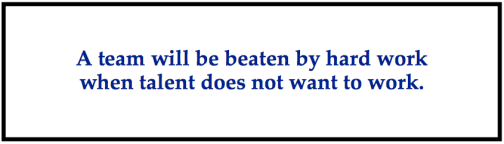
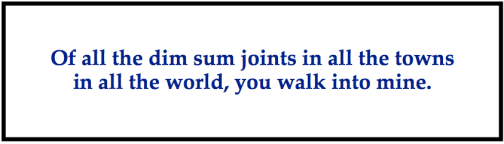
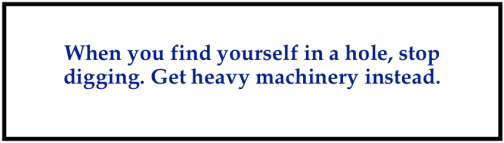
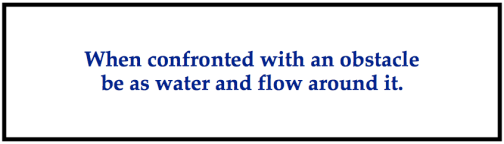
Citizens of earth encounter 2011 Fortune Cookie of the Damned fortune writing contest entries on the walls of Kerouac Cafe, Norfolk, Va.
The exhibit of 2011 Forfune Cookie of the Damned fortune writing contest will stay up at Kerouac Cafe in Norfolk, Va., through most of July, not just a week, as I’d initially thought.
I found out during an informal gathering last night at Kerouac, 617 W. 35th St., Norfolk. No formal end date, but they’ll be up a couple more weeks than anticipated.
First place winner Gary Potterfield was not in the area. Third place winner Christopher Scott-Brown was not available. But second place winner Will Harris was on hand to get his prizes.
Let’s just acknowledge that this post, true to form for this blog, buries the lede deeper than a wannabe New Yorker scribe unpacking his first anecdote.
Entries were funny, fun, creative, and some other words, too. So thanks. You kept me smiling while I judged this past week at the Poconos Woodland Castle of Judging between diligently editing short stories, attending Wawayanda, N.Y., town council work sessions, researching the American black bear, and such. Because I know how to party.
Naturally, the winners were paw-carried back to Virginia by Keystone State bears. You should have seen them on the Delaware Memorial Bridge. Aside from one brief misunderstanding in the E-ZPass lanes, they were so adorable you could eat them up. Which you should do, preemptively, before the bears turn that notion around on you. Remember: Now that they have E-ZPass, the bears are especially quick and more cunning than ever before.
And the winners are …
Hold on. More about pretend bears avoiding the exact change and cash/receipts toll lanes? No? Pity.
Second, a plug: Anybody available is invited to an informal gathering at Kerouac Cafe in Norfolk, Va., at 8 p.m., July 1, at Kerouac Cafe, 617 W. 35th St., Norfolk. Free admission. Coffee, tea, lattes, iced drinks are available for sale, and there may be some eats.There will be a mini-exhibit of the winners and prizes will be handed to winners who can make it. Most of the entrants will be on display, too. Entries remain up for a whole week.I now have word that the exhibit will stay up through most of July.
Third, thanks to my fellow members of the Great Panel of Judgment – Mike D’Orso, Cate Doucette, Cortney Doucette, Oliver Mackson, and Earl Swift. There were more than 50 fortunes submitted, and 13 finalists. The first place winner had three of the six first-place votes by the judges. The judges besides me judged only fortunes, as I stripped out the names before giving them the finalists to consider.
Okay. Enough of that. Without further ado:
FIRST PLACE
Gary Potterfield, operations director of a PR firm; Waldorf, Md.
SECOND PLACE
Will Harris, pop culture obsessive; Chesapeake, Va.
THIRD PLACE
Christopher Scott-Brown, bookseller; Virginia
HONORABLE MENTIONS
Geoff Ahlberg, senior network engineer for Endeca Technologies; Malden, Mass.
Dani Al-Basir, artist and poet; Norfolk, Va.
Dani Al-Basir, artist and poet; Norfolk, Va.
Brendan Beary, working for The Man; Great Mills, Md.
Brendan Beary, working for The Man; Great Mills, Md.
Peter Carnevale, ambulance driver; Providence, R.I.
Peter Carnevale, ambulance driver; Providence, R.I.
Peter Carnevale, ambulance driver; Providence, R.I.
Ian Couch, Old Dominion University MFA student; Norfolk, Va.
Ian Couch, Old Dominion University MFA student; Norfolk, Va.
John-Henry Doucette, scribbler; Portsmouth, Va.
John-Henry Doucette, scribbler; Portsmouth, Va.
John-Henry Doucette, scribbler; Portsmouth, Va.
Will Harris, pop culture obsessive; Chesapeake, Va.
Will Harris, pop culture obsessive; Chesapeake, Va.
Blake Hunt, working writer; Norfolk, Va.
Judy Le, editor; Norfolk, Va.
Ian Martin, photographer; Northern California
Ian Martin, photographer; Northern California
Chris Mele, executive editor of The Pocono Record; Stroudsburg, Pa.
Angelina Maureen, fine artist; Norfolk, Va.
Michael Nixon; Norfolk, Va.
Michael Nixon; Norfolk, Va.
Gary Potterfield, operations director of a PR firm; Waldorf, Md.
Gary Potterfield, operations director of a PR firm; Waldorf, Md.
Gary Potterfield, operations director of a PR firm; Waldorf, Md.
Gary Potterfield, operations director of a PR firm; Waldorf, Md.
Barbara Russel; Chesapeake, Va.
Bob Voros, graphic artist; Norfolk, Va.
Bob Voros, graphic artist; Norfolk, Va.
Bob Voros, graphic artist; Norfolk, Va.
Thanks everybody. I think I’ll try this again next summer.
Second, the exhibit of entries will be up tomorrow night at Kerouac Cafe, and anyone who is available can gather at 8 p.m. to gaze upon them.
They’ll stay up for a week. Again, the gathering is at 8 p.m. Friday, July 1, at Kerouac Cafe, 617 W. 35th St., Norfolk. Free admission. Coffee, tea, lattes, iced drinks, and possibly some eats will be available for purchase.
Donations, discounts, and/or other considerations for the prizes were made by Prince Books, Naro Expanded Video, Kerouac Cafe, Local Heroes, Mike D’Orso, and Earl Swift. Thanks, you guys.
And thanks to all fortune cookie fortune writers, wherever you are.
Swift, formerly of The Virginian-Pilot newspaper, is a journalist and author of Journey on the James, Where They Lay, and The Tangierman’s Lament and Other Tales of Virginia.
This has been an unusual experience for me. I’ve never had a book get this much attention.
For what it’s worth, that may be because it’s freaking terrific. Finished it last week. Highly recommended.
For those interested in inspired silliness, Swift recently participated in a Belligerent Q&A that can be found at this link, the most popular Q&A to date here. I hope to have more with Swift at the blog in the near future.
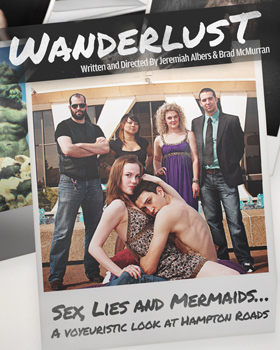
This is the second and final part of a craft conversation with playwrights Jeremiah Albers, theater critic at AltDaily, and Brad McMurran of The Pushers comedy group.
They have collaborated on Wanderlust, part of the Dog Days Festival at the Generic Theater Down Under Chrysler Hall in Norfolk, Va. It premieres Friday, June 17, at the Generic, 215 St. Pauls Blvd., Norfolk downtown. The run is from June 17-19, 23-26, 8 p.m. Thursday through Saturday and 2:30 p.m. Sundays. Tickets are $10. For more information call (757) 441-2160 or visit the Generic’s online reservation Interbot thingy.
This has been edited for length, clarity, and, in cases that should be fairly apparent, language. This part of the talk discusses comedy writing, criticism, playwriting, and stereotypes in comedy. And some links and a video in this post contain adult language and probably are not safe for work.
Q: You’ve done theater criticism, and I think it’s been good criticism. This is bias, but sometimes I have an expectation that local theater criticism is a little soft.
Albers: Yes.
Q: I think you’ve said some tough things about friends. Can you talk a little bit about what that process of working as a critic has been?
Albers: When I decided that I wanted to start taking that on, the reason I did it really was we need to create a dialogue about the quality of the theater in this area if the theater in this area is ever going to really matter to this area. Part of doing that is having someone there who is willing to call BS. And it wasn’t easy, and I probably made a lot of enemies, I’m sure.
McMurran: I don’t think you need the word probably.
Albers: Okay. We’ll omit the word probably. I think it’s important. We need a dialogue. I think that whatever happened after that one review I wrote –
Q: Which review?
Albers:Equus.
Q: It was a tough review.
Albers: Yeah, but it was also a tough show to sit through.
McMurran: I never saw the show, but it was the most seething review I ever read.
Albers: Yeah. His production of Agnes of God was outstanding. And Philip’s great. I have no beef with Philip. Part of the reason I did that is I think Philip has genuine talent. … Art is an educational process. You never stop growing and you never stop evolving. It’s never done. This work is never done. It’s important to create this dialogue, and, I think, in some ways it has had an impact. You are finding the theaters being a little more careful about the shows that they are choosing. LTN (Little Theater of Norfolk), I have to give them props. Under Brendan Hoyle, this new guy they have as artistic director, the professionalism and quality of that place has gone up a hundred fold. I can’t take credit for that, but I think that dialogue, that little growing pain the local theater community had as a result of that, was how I did (help). … I really do go in there and try to be objective. … It’s not personal. If you don’t want to be a public spectacle, get off the stage.
McMurran: After he’s written these reviews, we’ve got a big target on our head. (Laughs.)
Q: Who is going to review it for AltDaily?
Albers: I don’t know.
Q: Not you?
Albers: No. Not me.
McMurran: That would be awesome.
Albers: I would just be like, “It stinks.” (Laughs.)
Q: Did the process of really having a look at what other people are doing and thinking critically about it … did that help you in the writing process?
Albers: Yes, it helps me in every process. I had a college professor and one of his big mantras we used to laugh at because we were kids and we didn’t really understand, but he used to say, “Theater is important, but bad theater is more important.” And we were like, “Whatever, that play sucked.” … Watching theater, I learn all the time. I see stuff in shows that I know I’ve probably stolen and, you know, taken my own way. Or I’ve seen stuff and said, “Okay, there’s a million things wrong with that. What’s wrong with that? Well the pace is wrong with that. Well, the joke isn’t funny.” … It helps you understand the mechanics of structure and of technique. Because there really is a craft to writing. … There really is a craft to directing plays. It’s not something everyone can do well even though they think that they can. The more you look at things that way the stronger it’s going to make you.
McMurran: I’m just glad we’ve had so many big words.
Q: I saw that Hump N’ New York video. (For The Pushers.)
McMurran: Yes. It’s one everybody goes back to.
Q: Would you talk about how it came about?
McMurran: There was what we call a skeleton. There was one objective – he couldn’t find his girl. Tracy. The fact that he runs the streets of New York on New Year’s Eve, that just was his obstacle. My favorite thing that ended up happening in that video is the girl behind us … that would help us with mikes and stuff, she was from New York. She said she had never seen more New Yorkers smile. I stayed in character (almost) the entire day. I can’t tell you how many people followed us into the subway.
Q: There are a couple of times where there are jokes, but it’s about somebody who can’t get what he wants.
McMurran: Never does.
Q: And he goes to the big city and he’s looking, and there’s all this spectacle, and he compares it to his hometown and then there’s the part I love with Morgan Freeman (or a likeness), where everybody’s crowded around him (or it). Was that just kind of found?
McMurran: It was literally a found moment. And the only thing that came into Hump’s mind that day was the movie Seven where he kept asking “What’s in the box?” (Laughs.)
Q: Which actually, thematically, is a pretty great line.
McMurran: (Laughs.) “What’s in the box?” When I first started chanting it, it was like, what’s this guy in an egg suit and his tighty whiteys doing? But then it began a chant all the way down the street. (Laughs.)
Q: Was (Freeman) whisked away by security?
McMurran: The funny part is I didn’t know it was him. … It was either Morgan Freeman or the best wax museum guy that ever existed.
Q: I remember I saw Hump about five years ago.
Albers: It was the first sketch that came in.
McMurran: It was a mistake. I used to do standup and … the Zoloft commercial. To me I thought it was an egg that would walk into these parties and no one would talk to him. I was like, “Of course they won’t talk to you, you’re a freaking egg.” And he was all about depression. I did this in stand up and had this voice and character. It wasn’t until I got off stage that night that someone said, “You know, those are tears in the Zoloft commercial. That’s not an egg at all.” I’m like, “Oh (numero dos).” (Laughter.)
Q: (Hump) is a really sad character.
McMurran: Absolutely. His father’s very mean to him.
Q: What do you think when you’re writing a sketch where the character is very sad and people are supposed to laugh at it? Or you’re writing a sketch where there’s a dad who wants his son to be gay? … What do you want to happen from that sketch?
McMurran: Well, that’s two different questions. On one end, it can do a lot of things. … (H)e became this underdog that the audience really rooted for, even when they shouldn’t have rooted for him, when Hump would go to some extremes. … As far as your other question … The one thing I learned in the last three years that I did not know when I first started doing comedy is just how when an actor would come in and say, “How do you want me to play this? Comedically or dramatically?” And we’d be like, “Next. I don’t want you at all.” Because there is no difference in how you play it. That’s all in writing. … I think that’s what made that scene funny. I still use the word think because you never know, but as far as having a dad that wants you to be something else, you nailed it. The dad wants you to be something else, it’s just ridiculous in the fact that he wants you to be something that’s not a social norm, necessarily – I don’t want to say being gay is not a social norm. You know, it can be perceived that way.
Albers: Wanting your child to be gay is certainly not a social norm.
Q: Right. Well, that’s interesting. And I’ll try to ask this as artfully as I can. Sketch comedy can be misogynistic. And it can be homophobic sometimes –
McMurran: Well, you guys come to a show. You’re right.
Q: Do you worry about putting out that kind of comedy?
McMurran: Not at all. And I can answer that very … We had every race, creed in this show at one point in time. Homosexual, not homosexual. One thing we believe – we’re in a PC world now. And that there’s nothing more cathartic than being able to go in and laugh at things you’re not supposed to laugh at. I think that actually is, and this is one time I’ll actually get serious about this, is I think that’s such a release. To be able to go in, you know: “You can’t say that, you can’t do that. Laughing at somebody that falls down is bad, especially if they’re old.” Well what if it does make you laugh? Are we supposed to repress that? I don’t believe we should.
Albers: There will be people who get touchy. There will be people who, when you go there, will get up and walk out of the theater. And, you know, okay, fine. … You can’t please all of the people all the time. You shouldn’t censor yourself for fear of offending.
Q: I guess that’s not what I’m saying. I mean, do you think about what you’re putting out when you’re writing it?
McMurran: Yes.
Albers: Yeah.
Q: I’m not saying that you’re misogynistic … When you talk about that material, I mean, that’s something people might think about.
McMurran: They do. I think it’s a great question if you want to know the truth. You’re hitting on something that’s much deeper than – Really, I actually love the question. There is a line, and when you find it, it’s very dangerous because you have to straddle it, and when you straddle it poorly audiences will tell you.
Albers: And you can do that but it is –
McMurran: You have to do that.
Albers: It is having the taste and the basic decency to not put your toe too far over the line. You’ve got to know where the danger zone is, and how to stay out of it. And you don’t always know that. …
McMurran: After doing 200, 150 shows, however many shows we’ve done over the years, if we have 10, two are going to be flirting with that. If not, in every one there might be one that flirts with that. … I will be a little arrogant here. In the last three years, craft has become a much more important thing, where it’s not just about shock. And I don’t like shock any more. If you want to know the truth, if we get a script or a sketch in that’s scatological or blue … we won’t put it in now where back then we put it in.
Q: I just wonder how do you negotiate that kind of line between being Pushers, and pushing the edge and the envelope, or just going for, “Hey, we just need to have something that at its core is funny and relatable.”
McMurran: I’m more about what I find funny. … If it’s funny, it goes in. If it’s funny and it has a social message, it’s definitely going in. If it’s crossing a line and it’s borderline funny, it still may go in depending upon what the statement is. Sometimes it’s – We’re not a political group, by any means, I think, on paper. But I think behind the scenes if you scratched us you’d find something. I love the question because I can’t honestly give you a full answer.
Albers: You find it as you’re doing it. I mean, really, it’s a trial and error kind of thing, and in sketch comedy you don’t have a lot of time to correct it. In a play, you’ve got five weeks, six weeks, so you know you can tweak this, change that, and maybe that needs to get cut. … You find it through doing it.
Q: Anything I should have asked but didn’t?
McMurran: I want people to come out, see this and honestly give what they feel about it. I know that everybody says that, but – It’s sexy. One thing we haven’t talked about in this is it’s a really sexy show. We have an incredibly sexy cast.
Albers: And we did that on purpose.
McMurran: This is the sexiest cast that has ever been cast in this area.
Albers: I will back you up on that.
Q: Other than the pretend cast I have in my head.
Albers: Exactly. But this is kind of our idea to kind of reinvent the local theater for Hampton Roads rather than the Hampton Roads theater serving itself.
McMurran: Love it.
Albers: Because that’s what it kind of has been for years. … We need to get some new ideas and some new work.
McMurran: Why aren’t there more local writers doing things like this?




















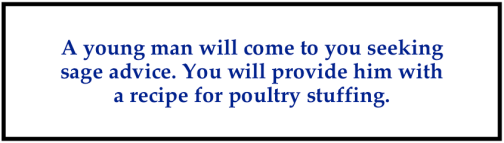



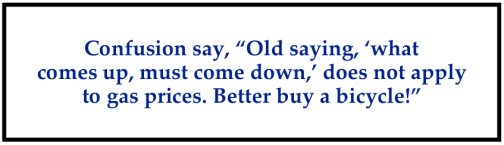


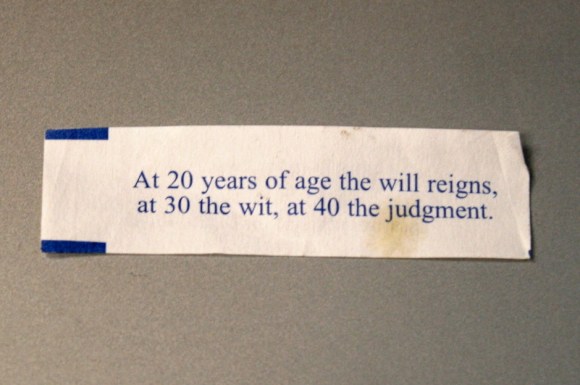 Judgment comes tomorrow. With coffee.
 This is the second and final part of a craft conversation with playwrights Jeremiah Albers, theater critic at
  John-Henry Doucette