Tag Archives: mike d’orso

Ted Danson reschedules Norfolk appearance at Prince Books


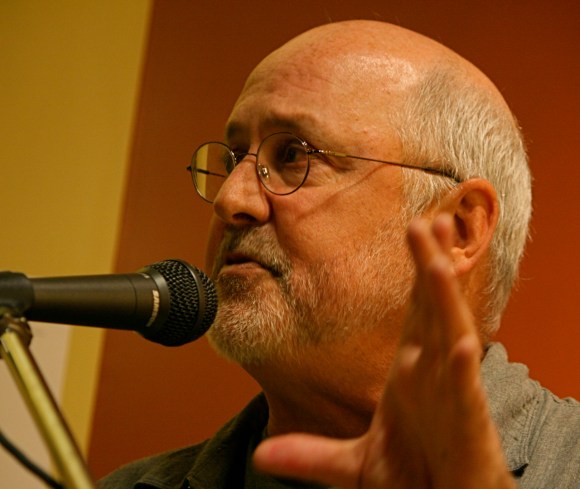
I never wanted to be a photo cutline. I just wanted to be close to Norfolk, Va., author Mike D'Orso. Photo by John Doucette.

It’s back on, baby.

Ran into Prince Books owner Sarah Pishko this evening in Norfolk, Va., where it is always sunny except when it is not, and she said Ted Danson is scheduled to come to Norfolk next month. And so it’s sunny again.

As you may recall, Danson had to cancel a planned visit in support of his recent writing project with local writer Mike D’Orso, Oceana: Our Endangered Oceans and What We Can Do to Save Them.

Danson was called away suddenly to battle the Yakuza, all of it at once, with his mighty anti-Yakuza Level 5 Power Handsome. Or he had to do some voice work for a cartoon. Okay, the latter is what discerning readers might call true.

Still, why do you hire the Danson and hide the handsome behind cartoon hijinks? Hollywood has been so confused ever since it went to the talkies.

D’Orso also sent out an email announcement this evening. And, so doing, he confirmed my crack reporting, which involved going to a store and running into somebody. Eat it up, Columbia J-School – two sources in a blog post! That’s like a hat trick, but with two things instead of three. Or a double threat. Because you can’t fight math.

D’Orso wrote:

We now have a new date and time set for Ted Danson to come and join me (and all of you – those can make it) in a discussion/signing of our book, Oceana: Our Endangered Oceans and What We Can Do to Save Them. The event will, as before, be held at Prince Books in downtown Norfolk, on Saturday, May 14, at 12 noon. As before, Ted will only be signing copies of the book (no other memorabilia).

Amusingly, D’Orso signed off in his email thusly:

Hope you can make it. It should be fun. – Mike D.

Amusing because Danson recently guested in the Beastie Boys video at this link, which is not safe for work unless your corporate pissing contests are a wee splash more than figurative. One of the Beastie Boys calls himself Mike D. Maybe that’s not really amusing, but it’s enough of a coincidence for me to get out of this post without bringing up the Yakuza again.

Anyway, the discussion and book signing starts at noon, Saturday, May 14, at Prince, 109 E. Main St., at the corner of E. Main Street and Martins Lane. If you head to Prince, there’s metered street parking and a couple city garages within easy walking distance. There’s also some free parking in the TowneBank lot behind the building on the Martins Lane side.

Previous posts with D’Orso can be found here. The book’s website is here. D’Orso’s website is here.

A glimpse of Danson in the Beastie video follows in this potty-mouth trailer:

Tagged , , , , , , , , , ,

UPDATED: Ted Danson coming to Norfolk for talk with Mike D’Orso


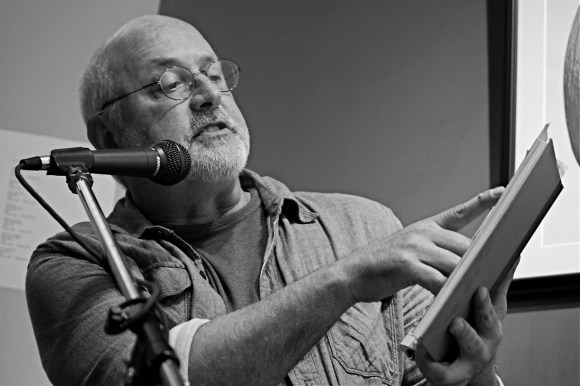
During a recent reading at Borjo Coffeehouse in Norfolk, Va., author Mike D'Orso points out something in a book he is holding. The microphone pretends to understand, but the microphone has a painful secret — illiteracy. Photo by John-Henry Doucette.

• • • • • • • • • • •

April 27

It’s back on, baby. Ran into Prince Books owner Sarah Pishko this evening in Norfolk, Va., where it is always sunny except when it is not, and she said Ted Danson is scheduled to come to Norfolk next month. And so it’s sunny again.

And you may recall, Danson had to cancel a planned visit this month to promote his writing project with local writer Mike D’Orso.

Danson was called away suddenly to battle the Yakuza, all of it at once, with his mighty anti-Yakuza Level 5 Power Handsome. Or do some voice work for a cartoon. Okay, the latter is what you might call true.

Mike D’Orso also sent out an email announcement this evening. D’Orso wrote:

We now have a new date and time set for Ted Danson to come and join me (and all of you – those can make it) in a discussion/signing of our book, Oceana: Our Endangered Oceans and What We Can Do to Save Them. The event will, as before, be held at Prince Books in downtown Norfolk, on Saturday, May 14, at 12 noon. As before, Ted will only be signing copies of the book (no other memorabilia).

• • • • • • • • • • •

April 19

Ted Danson has postponed his visit, according to Prince Books.

Prince hopes to have a new date to announce in the next week.

Mike D’Orso, in an email announcement, said Danson had to do a movie shoot:

Ted was extremely apologetic and we will set a new date soon. Sorry to all for the inconvenience. But rest assured he is still coming.

• • • • • • • • • • •

April 9

Welcome back to the blog that does little more than tell lame jokes about blood-spitting rock’n’roll bass players repping high-end insurance products and walk-up whatever Norfolk, Va., author Mike D’Orso is doing. Look, it’s a niche. When you see one, you gotta carve it out before James Franco does.

A while back, I wrote about D’Orso’s collaboration with Ted Danson, Oceana: Our Planet’s Endangered Oceans and What We Can Do to Save Them, published this past month by Rodale Books. D’Orso — he’s a friend, full disclosure — recently did a reading and Q&A at Borjo. It was great stuff, but it was light on Danson.

Now D’Orso says Danson is headed to Hampton Roads for an appearance at Prince Books, one of the last independent bookstores in these parts. A discussion and book signing starts at 1 p.m., Saturday, April 23, at Prince, 109 E. Main St., at the corner of E. Main Street and Martins Lane.

D’Orso, via email, said:

We’re going to have a nice casual sit-down conversation for the first half, then open the floor to any and all questions not pertaining to ‘Cheers,’ ‘Damages’ or ‘Bored to Death.’

So fire up those Becker, Body Heat and Three Men and a Little Lady questions.

Just kidding. Maybe just stick to ocean acidification, commercial fishing and so forth. Though if you want to ask something cheap — say along the lines of Apparently our planet’s oceans are endangered; what can we do to save them? — it’s been done. Got there first, didn’t I, Franco?

Regarding Danson, D’Orso added:

He – and I, if people want it – will then sign books before I toss him back in my Camry and drive him back to the airport.

And while you’re at Prince, maybe you could buy some books. It’s National Poetry Month. Twenty percent off poetry. Not bad, if you’re into that sort of thing.

If you head to Prince, there’s metered street parking and a couple city garages within easy walking distance. There’s also some free parking in the TowneBank lot behind the building on the Martins Lane side.

Please don’t park in Pete Decker’s space. It simply is not done.

Nothing left to say, so it’s boilerplate time:

Here’s a link to info on the Danson-D’Orso book.

Here’s a link to a recent video interview with and story on D’Orso by The Daily Press.

Here’s a link to D’Orso’s site.

Here’s a link to a James Franco fansite run by a lady named Vanessa, who will pay or already has paid good money to see Your Highness.

Finally, here’s an absolutely pointless link to the very post you are reading right now.

Tagged , , , , , , , , , , , , ,

Mike D’Orso book signing Wednesday in Norfolk


Norfolk, Va., writer Mike D’Orso will discuss and sign copies of his new book this week at Borjo Coffeehouse near Old Dominion University.

D’Orso, an award-winning author and formerly a journalist with The Virginian-Pilot, collaborated with the actor and environmental activist Ted Danson to pen Oceana: Our Planet’s Endangered Oceans and What We Can Do to Save Them. It was published by Rodale Books earlier this month.

The event is being held by Prince Books, a terrific bookstore in downtown Norfolk that for years has supported local writers – even when we haven’t had anything to sell.

Prince Books is one of the best things about downtown Norfolk. I’ll fight anyone who says otherwise.

The discussion and signing is at 7 p.m., Wednesday, March 30, at Borjo, 4416 Monarch Way, Norfolk. That’s at the corner of W. 45th Street and Monarch Way. Pretty much all of the parking around there is metered before 8 p.m., so bring a couple of quarters.

As regular readers of this blog may recall – love you, Mom – Mike spoke with me for a couple of posts earlier this month, including guest starring in the inaugural edition of the inexplicably and, let’s face it, only relatively popular Belligerent Q&A feature.

Also a more serious discussion on one of his great journalism stories can be found here.

Hope to see you Wednesday at Borjo.

They have coffee and grownup bevs for sale. Just throwing that in there.

Tagged , , , , , , , , , ,

Writing Craft, Vol. I: Mike D’Orso’s “The Project and the Park”


Mike D’Orso and I had a little fun the other day regarding his new book, written with the actor and activist Ted Danson.

I also asked via email about the craft of feature journalism writing. His answers are reflected in this post.

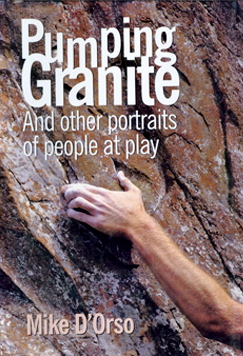
Among his writings, some of my favorites include sports journalism stories from Pumping Granite. A big favorite is “The Project and the Park,” the story of an evening at Tidewater Gardens, the housing project near Harbor Park in Norfolk, Va. Harbor Park was new when the story was penned for The Virginian-Pilot.

Here’s the lede, which instantly establishes two settings, the distance between them, and a main character:

It was an hour-and-a-half before game time at Harbor Park. The bleachers were empty, the grounds crew had yet to chalk the foul lines, but Catherine Newby was already settled into her seat – behind third base, beyond the left field parking lot, across ten lanes of interstate highway.

She’s 63, and has lived in the neighborhood for decades. Mike shows her appreciation for the park – the sound of music from the stadium, the lights in the sky. It’s a lesson in great reporting – not only going to a place and reporting through interviews and observation, though Mike is expert in such things, but also doing the research that allows telling detail within a narrative:

It is not a hopeful place. Nine out of every ten families living in its brick row buildings are headed by a single woman. Nearly half those households have an annual income of less than five thousand dollars. Ninety-seven percent of them are black.

None of which means a thing to Catherine. All she knows is this is her home. Those are her gardenias and petunias planted at the edge of her small concrete stoop. Those are her three metal folding chairs set up outside the screen door of her apartment. And that new stadium, its light towers looming above the traffic whooshing past on Tidewater Drive, is Catherine’s pleasure.

People from the neighborhood recall the story of opening night, as seen from there. There are scenes effectively, but it’s basically the narrative of the visit, interspersed with the game. The difference is a reporter with the ability to listen for great, telling quotes like this one:

‘Oh, what an evening!’ said Catherine. ‘You could hear the mayor, and Father Green, and the Star Spangled Banner. We all stood up and put our hands on our hearts when they played that. We sure did.’

Of course, not everybody is so thrilled, and the story ends with some real tension, and then also a gentle image seems to strike the right note while still being beautiful. I won’t spoil it, since you surely will go buy the book now. Anyways, I asked Mike a few craft questions about that story via e-mail. They follow.

Q: How did you find that story? Was that story assigned or hunted down?

Harbor Park was about to finally open, after months and months of construction, accompanied by dozens of stories about every aspect of the park, right down to how the hot dogs and buns would be shipped to the stadium.

It occurred to me, as I exited off I-264 one day, right by the ballpark, that this stadium literally cast a shadow over the housing project on the other side of the interstate – Tidewater Gardens. I thought about the fact that these people had watched this behemoth grow right before their eyes, and that it was a symbol of the monstrous class-and-economic divide that exists in America today between the ‘haves’ and the ‘have-nots.’ I doubted that many residents in Tidewater Gardens could afford a season ticket – or even the cost of a single game (including the exorbitant cost of concessions at a ballgame). In other words, though these people lived closer to this stadium than anyone, it may as well be a universe away.

Frankly, it also angered me that whenever The Pilot did a story involving a community like this, the reporters always interviewed and quoted the ‘usual suspects’ – a couple of community leaders and local politicians who always ‘spoke for the people,’ rather than approaching and allowing some of the people to speak for themselves. This was certainly the case in the one or two stories The Pilot had done in the previous months concerning the neighborhoods near Harbor Park – including Tidewater Gardens.

So I got Lawrence Jackson, a brilliant photographer with The Pilot at the time (and now an official White House photographer), to join me, and we simply went over to Tidewater Gardens on the night of a home game and roamed the neighborhood from about 5 p.m. (a couple of hours before game time), all the way till the final out was made, at about 9:30 or so.

We just played it by ear, chatting with people we happened upon, talking with them about their feelings concerning the ballpark, and always, inevitably, having the conversation expand into their feelings about their lives in general and about their community.

One point I hoped the story would make, although this wasn’t a stated or intended agenda, was to show that this community and so many like it – which are so often reduced to the broad, sweeping, and negative stereotypes that accompany terms such as “inner-city,” “public housing,” and “project” – is not filled with just crime, violence and poverty, but is also home to people and families, who have the same values, wants and needs as people in any other community … people who care about their neighbors, who take care of one another because so much care is needed and so little is provided, and who, yes, would love to be able to have a seat in that stadium over there and take in a ballgame. If they can’t do that, Lawrence and I found, some of them do the next best thing, pulling a chair outside the front door of their rowhouse, tuning the radio to the ballgame, and enjoying the evening like any other fan, some even standing for the national anthem, just like the people under the lights over there, across the highway. Just normal, ‘good’ people, making the best they can of their lives – that’s what that story boiled down to.

Q: How did you begin reporting it? Did you research the neighborhood or just drive out there?

I always like to do as much research as I can before going out for the actual ‘reporting.’ This gives me some understanding of particular issues, an idea of some issues I might want to explore, and it also gives me a few nuggets of fact that I can sprinkle throughout the narrative – not so many that they bog down the story to the point where it reads like a government study, but enough to illuminate a particular scene.

That old writers’ saw about ‘show, don’t tell,” should actually be “show AND tell,” in just the right proportion.

Q: You use numbers very quickly and very effectively in the story, to make a sort of point that quickly is humanized by shifting back to the people in the narrative. At what point did you gather your statistics on the neighborhood?

As I said, I gather a good amount of statistics before I go out and report. Then, when I come back,  I’ll almost always find myself looking up a specific fact or statistic I didn’t have before, prompted by something seen or said while I was out ‘in the field.’

Q: Why did you think this was an important story to tell?

I think I answered this earlier.

Q: What was the editing process on this story?

Very little, if any.

Q: Did it change from the first draft?

Very little, if any.

Q: Did you outline? Why?

I always outline before I write. I believe it’s always necessary to have some kind of map to follow. Nothing rigid. I ‘outline’ much like a filmmaker ‘storyboards’ his movie. That’s how I arrange and prepare a story prior to writing. I think in terms of scenes, very much like a filmmaker. Once I’ve arranged my ‘scenes,’ I then take my raw material – research, ‘field’ notes, etc. – and distribute it among the scenes, putting this quote or factoid in this scene, and that quote or factoid in that one, and so on. Then I begin to write, always with the flexibility that the scenes might be reshaped, rearranged, or restructured as I go along.

Again, you can learn more about Mike’s writing and books here. And this is the link for his new book with Ted Danson.

Tagged , , , , , , , , , , , , , , , , , ,

Belligerent Q&A, Vol. I: Mike D’Orso


Norfolk, Va., author Mike D’Orso’s new collaboration with the actor and environmental activist Ted Danson will be published March 15.

Oceana: Our Planet’s Endangered Oceans and What We Can Do to Save Them is Mike’s 11th “collaborative book,” and he has written five of his own.

Previous collaborative subjects include former New York Jets player Dennis Byrd, former U.S. Senate Majority Leader Tom Daschle, D-S.D., and civil rights pioneer and current U.S. Rep. John Lewis, D-Ga.

Mike’s working on a memoir and how-to book now. The working title is WITH… : The Long Strange Trip of a Professional “Ghost” Writer.

Mike agreed to answer a few questions by email. Only after he received the questions did he realize there were no backsies.

Q: Just who do you think you are? Please use three examples in your response.

It often depends on the day – sometimes on the hour. At the moment, I am:

  1. A proud father (of my 26-year-old daughter, Jamie)
  2. A 14-handicap golfer (it’s been a long winter–a lot of rust to shake off)
  3. Hungry (it’s almost time for lunch)

Q: Apparently our planet’s oceans are endangered. What can we do to save them?

The first step is realizing the numerous ways in which the oceans are threatened, the extent of those threats, and how truly catastrophic the consequences will be if something (many things) aren’t done and done soon.

There’s no room here to list the dozens of courses of action that we as individuals (not just Americans, but all people), that our government (not just the U.S. government, but the international community), and that the global fishing industry can and must take to stem the tides of overfishing, ocean acidification, marine habitat destruction, insidious government subsidies, and corruption among commercial fisheries that threaten to turn the oceans into nothing but watery deserts within the next half-century.

Q: Regarding Ted Danson, how handsome is too handsome?

I believe the definitive answer is provided in the video found at this link in which Ted, of course, makes an appearance. (About two minutes in.)

Q: If we submerge Oceana: Our Planet’s Endangered Oceans and What We Can Do to Save Them in water, will it expand into a giant sponge shaped like a commercial fishery?

Are we talking sea water or fresh water?

Q: The book lists for $32.50 in the U.S. and $37.50 in Canada. Do Canadians care 15 percent more than do Americans about the oceanic biosystem?

No. There’s a dirty little secret in the publishing industry at work here … it’s called the ‘Uncle Sam Discount.’ (The statute was hidden deep in the pages of the Patriot Act.)

Q: We’ve covered so much ground here. What else would you like to say?

Time for lunch!

If you followed Mike’s link to that video above, and either are a patient individual or reading this at work, you may have realized by the fifth minute that too much handsome cannot save too little funny.

Mike answered a few more questions on one of my favorite journalism stories from his days at The Virginian-Pilot, collected in his book Pumping Granite. I’ll post that this weekend.

A site for the new book is here. Mike’s own site is here.

Tagged , , , , , , , , , , , , , , , , ,