Category Archives: Fiction

Next Tunnel Traffic reading Wednesday at Borjo in Norfolk


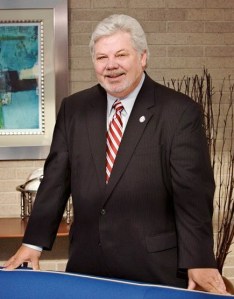
Maybe it's true that you can indict a ham sandwich, but prosecutors are busy with this guy. Photo of former state Del. Phil Hamilton courtesy of Wikipedia Commons.

The next Tunnel Traffic open-mic reading is tomorrow, Wednesday, May 4, at Borjo Coffeehouse near Old Dominion University in Norfolk, Va.

The event is open to the public.

Tunnel Traffic is a topical reading series, meaning writers write to a prompt in advance of the reading or read something that aligns to the prompt. For tomorrow’s event, the prompt is “anything with the word ‘test’ in it,” as per series creator Travis A. Everett.

Perfect end-of-the-semester topic. Ode to my Classical Rhetoric exam?

Yo, St. Augustine

you freewheeling scamp

rhetor of God

the hippest of Hippo

linguistic test of faith

holy multiple choice

you KO my GPA …

Really writes itself from there. Unlike the second essay question. And let me mention how I’m not in the poetry program.

I wonder what we’ll hear tomorrow.

We’ve been reminded this week about ODU’s former Virginia state delegate hiring program and all. I’m sure Mace and Crown staff will get around to covering it after we get a freaking Chipotle in University Village or something.

Say, I feel another poem-like thing coming on. I call it “Quid Pro Oh No”:

A delegate tried to secure funding

for a state university

with a string attached

and unlike the assembly

that bestows such funds

it wasn’t general at all – no! –

the string was specific,

tied to the assemblyman himself,

job hunting, job getting

in a ‘corrupt arrangement’

federal prosecutors allege.

Boy. Need to work on that last line. And I didn’t get the word “test” in there. Nuts.

Oh yeah, Tunnel Traffic.

As I wrote here last month in a Q&A with Everett at this link, the series was developed by Everett in coordination with the MFA Creative Writing Program at Old Dominion University. A sponsor is Barely South Review, the program’s online literary magazine. I’m in the MFA program, by way of full disclosure. It’s pretty awesome, so I’ll hope you’ll check out these links in this graf.

This is a casual, fun event.

As Everett said last month, via email:

Seeing how other writers approach the same task can help expand your sense of what words can do. It’s a low-pressure way to get reading experience.

The reading starts at at 8 p.m., Wednesday, May 4, at Borjo at W. 45th Street and Monarch Way, Norfolk. More about Tunnel Traffic at this link.

A few oh-by-the-ways:

  1. I’ve started keeping track of some local arts events at this page, so please check it out if you are so inclined. Send events for consideration to jhdouc@verizon.net. Mostly I’ve tracked Tunnel Traffic, ODU readings, and stuff my pals are doing, but I’ll list other stuff, too. In exchange for a job at your organization. Just kidding, U.S. attorney’s office!
  2. Additionally, this blog’s new homepage address is www.jhdoucette.com. Bookmark or avoid as religious doctrine dictates.
  3. People accused of crimes are innocent until proven guilty. Even former state lawmakers.
Tagged , , , , , , , , , ,

Belligerent Q&A, Vol. III: Travis A. Everett of Tunnel Traffic


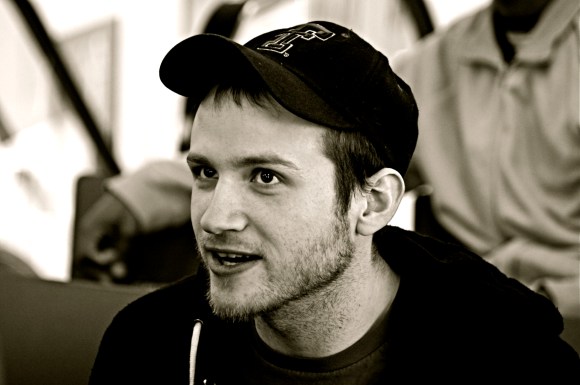
Travis A. Everett, who is from Texas, wears a hat with not one but two Ts on it in this photo. He is the founder of Tunnel Traffic, an occasional reading series. Texans seem to like a certain kind of alliteration. Photo by John-Henry Doucette.

Tunnel Traffic is an open-mike reading series that generally is held at Borjo Coffeehouse near Old Dominion University in Norfolk, Va.

The series was developed by Travis A. Everett in coordination with the MFA Creative Writing Program at Old Dominion University. One of its sponsors is Barely South Review, the program’s online literary magazine. By way of full disclosure, I’m a student in the MFA program and was one of the fiction readers for the review this past year.

I recently traded emails with Everett, since the next reading is coming up on Wednesday, April 13. The topical reading series is meant inspire new work and provide reading experience for students, according to the webpage. Writers write to prompts announced before each reading. The vibe is meant to be low-pressure and casual.

In addition to his studies at ODU, Everett is a poet and the founding editor of escarp, a text message-based review of “super brief literature.”

This Belligerent Q&A is about Tunnel Traffic. In case you missed the photo cutline above, let me mention that Everett is from Texas. I wonder if that will come up.

Q: Just who do you think you are? Please use three examples in your response.

  1. An accident waiting to happen
  2. A typography/design geek
  3. A weekend programmer

Q: It seems to be an interesting choice to name something Tunnel Traffic and expect people from Hampton Roads to want to experience it. Please describe your marketing plan in a limerick, haiku, or rhyming couplets.

I come from West Texas
where sky is the coolest thing
you can drive under

Q: The bling, the flashy cars, the reality shows – hasn’t the public had enough of the ostentatious lifestyles of the creative writing community and its twisted, insatiable passion for the subversive forms of fiction, poetry and narrative nonfiction?

Well, I think that’s actually one of the problems contemporary literature faces. So the equivalent of a Benz and a bottle of Cristal is a stuffy reading voice or a highly referential style that both resist non-writers — and the reality-show analog is writing about a writerly life like it’ll matter to anyone who isn’t a writer. There’s room for that, of course, but I also think it’s a really self-fulfilling prophecy to bemoan the lack of readership for very writerly books of poetry and prose. So in that sense, yeah — I think the public has had its fill of a specific kind of writerly lifestyle.

Q: Your readings are “topical” – please explain. Does that mean topical like a Jay Leno monologue, or topical in a way that prolongs one’s will to live?

Or topical like anti-itch cream? So you can listen to one late night monologue and hear a joke about, let’s say, a runaway Toyota, and you might laugh. But a single joke doesn’t show how far the content can stretch. Let’s say it’s topical like a roast, or a slam-dunk contest: shedding the usual rules of the dance give it a relaxed, fun, informal atmosphere with an undercurrent of both inter- and intra-personal competition.

In some sense it doesn’t matter, on The Tonight Show, if Jay has the best Toyota joke or not (as long as his joke is at least funny) because he’s not in a topical context. But if you take a number of late-night hosts and other comedians and let them know you’re having a runaway-Toyota-joke-night, they’re each going to be looking for an angle no one else will take and as a result they’ll cover a lot more territory, territory they probably wouldn’t have opened up as individuals outside of that context.

Q. We’ve covered so much ground here. What else would you like to say?

If you commit to coming, a topical prompt will help you write something you probably wouldn’t have written otherwise. Seeing how other writers approach the same task can help expand your sense of what words can do. It’s a low-pressure way to get reading experience.

The next Tunnel Traffic reading is scheduled from 8 to 9:30 p.m., Wednesday, April 13, at Borjo at W. 45th St. and Monarch Way. The topics are Easter eggs and/or gunpowder. Members of the public are welcome to come out either to listen or to read.

Tagged , , , , , , , , , , , , , , , , ,

Publication rights and the Web


I published a short story many years ago that involved a respectable enough literary review, a contract and a sum of money for first-publication rights.

This was before the Web was an issue. Back then, everything was made of wood, you see.

Now, for the second time since the online age began (really the past few years, in my case), I’ve found a subscription archival service that effectively is republishing (selling, among many other works) access to PDFs of my work, though I own the sole rights to this story.

I’m not sure how big a deal to make of this, but it reminds me of issues I’ve had with reproduction of my freelance (and, come to think of it, staff) journalism work, such as republication of an old story in a “sister publication” without explaining the original context.

If any of my writer or photographer pals have had similar experiences or know of anyone who has, I’d be glad to know via email.

I might write about it. I’m at jhdouc@verizon.net.

Tagged , , , , , , , , ,

Barely South Review features Dennis Lehane


The new edition of Barely South Review is now online, and among its many new features is an interview/essay by Tony DeLateur with Dennis Lehane, author of Mystic River and other novels.

DeLateur is a pal from the Old Dominion University Creative Writing program. He does a nice job walking through Lehane’s general chop-busting of writerly writers and the critics who love labeling, and slides into the advice:

Responding to the aspiring writer’s first great hurdle, the blank page, Lehane simply said, ‘Gut it out…the only answer is the answer that nobody wants to hear: you just have to put your ass in a chair and write.’

And capping his take on Lehane:

Dennis Lehane’s ability to execute intricate, believable stories that rise naturally from characters’ actions has garnered him both success and recognition. In addition to his print work, Lehane was tapped for HBO’s The Wire, a sprawling drama hailed by many critics as one of the greatest television series ever made. Three of his novels have been adapted into feature films. All this is proof enough to certain bitter writers that his work is too universal, too simple. But after hearing this author expertly dispatch preconceived notions about what a “crime author” should value, I left believing that only two types of fiction exist: stories that work – that have journeys which contain drama and emotional depth and action – and those that don’t.

So I hope you’ll read the story, if you dig Lehane or writing in general. The advice is fairly common sense, of course. I just like Lehane.

I also pulled out my notes from Lehane’s talk last year at the ODU Literary Festival, and here provide some high points.

Lehane on Lehane:

I’m a bastard child of pulp fiction and high art.

On writing:

You should always write the book you want to read.

You can’t be an author without being an outsider, a round peg in a square hole.

The relationship when I write is a very intimate and charged relationship between me and an imaginary reader.

If you’re going to write a novel, you’ve got to know how to plot. Tell a story, move it forward, have a beginning, middle and end. … People read for story. … You have to engage the reader in telling a story, and nobody can tell me different.

On when you meet an ass of a writer:

It’s cause they never had friends.

And (though you miss a bit without Lehane’s delivery) on graduate students in MFA programs and such:

I always write 20 pages into a book of a character sitting in a room. You guys actually turn them in.

Tagged , , , , , , , , , ,